 Skype Me
Uncategorized
T8 Led Grow Lights Manufacturer Guide
Catalog
Industry Insight: T8 Led Grow Lights
The transition from fluorescent T8 fixtures to horticultural-grade LED technology is no longer a future trend—it is a present-day production requirement. Growers who still rely on 32 W or 54 W T8 fluorescents are leaving 30-40 % of photosynthetic photon flux on the table while paying for ballast draw, shorter lamp life, and mercury disposal fees. A purpose-built T8 LED grow light eliminates these inefficiencies by converting the same 48-inch form factor into a high-PPFD, spectrum-tunable engine that drops directly into existing G13 sockets. The result is double the micromoles per watt, 50 000-hour L70 life, and the ability to steer morphology through red/far-red/UV channels without swapping tubes.
Seven Colors Lighting (Maxmax Tech) has been manufacturing these specialized LED engines in Zhongshan, Guangdong since 2009. Our 18 000 m² vertically-integrated campus houses SMT lines, spectral-grade integrating spheres, and an in-house anodizing plant that lets us move from diode reel to finished grow tube in under ten days. Located 90 minutes from Shenzhen port and 20 minutes from the lighting component corridor of Guzhen, we source full-spectrum 3030 and 2835 diodes, polycarbonate diffusers, and high-reflectance aluminum housings within a 30-km radius—compressing lead times and allowing lot sizes as low as 300 pieces for custom spectrum builds. Every T8 grow lamp is LM-79 tested, CE/ETL certified, and shipped with a PPFD map validated in our 1.5 m integrating sphere, giving commercial cultivators the data they need for GMP-compliant cultivation plans.
Technical Specifications
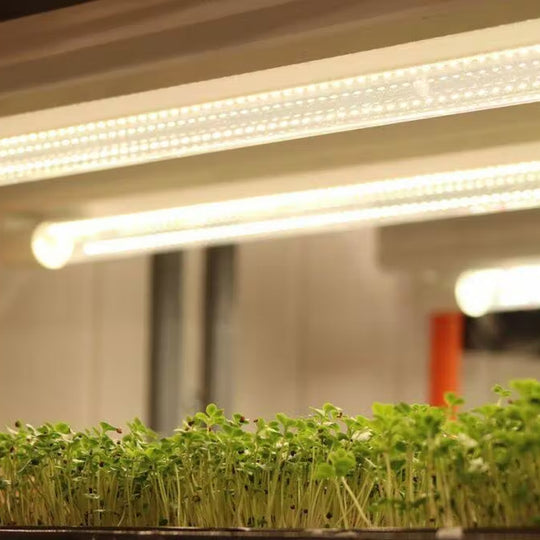
The evolution of horticultural lighting has transformed indoor agriculture, with LED technology now serving as the cornerstone for efficient, scalable plant cultivation. Among the most practical solutions for growers upgrading legacy systems are T8 LED grow lights—retrofit-ready tubes designed to seamlessly replace traditional fluorescent fixtures while delivering advanced horticultural performance. These fixtures are engineered to meet the demanding requirements of controlled environment agriculture, balancing technical precision with operational flexibility. For commercial growers and greenhouse operators, understanding the core technical attributes of modern T8 LED grow lights is critical for optimizing yield, reducing costs, and ensuring long-term system reliability.
Full-spectrum capability is a defining feature of high-performance T8 LED grow lights. Unlike conventional fluorescent tubes that emit narrow wavelength bands, these fixtures are designed to cover the entire photosynthetically active radiation (PAR) range of 400–700 nanometers, with strategic enhancements in key spectral regions. Blue wavelengths (450–495 nm) drive vegetative growth and structural development, while red wavelengths (620–700 nm) maximize photosynthetic efficiency and flowering. Advanced models also integrate far-red (700–750 nm) for photomorphogenic control and UV-A (315–400 nm) to boost secondary metabolite production, such as terpenes and flavonoids. This comprehensive spectrum ensures plants receive balanced light quality throughout all growth stages, from seedling propagation to fruiting, without requiring multiple light sources or complex spectral adjustments.
High PPFD (Photosynthetic Photon Flux Density) output is another critical technical advantage. T8 LED grow lights achieve PPFD levels exceeding 300 µmol/m²/s at typical growing distances, significantly outperforming older fluorescent systems that often deliver less than 150 µmol/m²/s. This high photon density is made possible through the use of premium, high-efficiency LED chips and precision optical designs that minimize light loss. The result is uniform light distribution across the crop canopy, reducing hotspots and shadowed areas. For vertical farming operations or tight-space environments, this ensures consistent growth rates and higher yields per square foot. Additionally, the directional nature of LED emission reduces wasted light, directing more photons toward the plant canopy rather than the surrounding structure.
Heat management remains a persistent challenge for LED lighting in horticulture, particularly in the compact form factor of T8 tubes. Seven Colors Lighting addresses this through an integrated thermal architecture that combines high-purity aluminum housings with thermally conductive internal pathways. The design incorporates heat-spreading fins and passive cooling mechanisms that dissipate heat efficiently without relying on noisy or power-intensive active cooling systems. This ensures stable junction temperatures below 65°C during continuous operation, preventing premature lumen depreciation and extending the operational lifespan to over 50,000 hours. Consistent thermal performance also maintains spectral stability, avoiding color shifts that could compromise plant development.
Beyond technical specifications, Seven Colors Lighting prioritizes accessibility and adaptability for diverse business needs. Small minimum order quantities (MOQs) starting at just 10 units enable smaller-scale growers and emerging vertical farms to trial the technology without significant upfront investment. Customization options further enhance flexibility, allowing clients to tailor spectrum profiles for specific crops—such as increased blue for leafy greens or far-red for flowering plants—adjust voltage inputs for regional electrical standards, or modify physical dimensions to fit unique fixture configurations. This level of customization ensures seamless integration into existing infrastructure while addressing the precise demands of each growing environment.
For commercial horticulture operations seeking to modernize legacy lighting systems, T8 LED grow lights represent a practical, high-performance solution. By combining full-spectrum precision, high PPFD output, and robust thermal management with flexible ordering and customization options, Seven Colors Lighting delivers a reliable, cost-effective pathway to improved crop outcomes. As the industry continues to evolve, these fixtures exemplify how targeted engineering and client-centric service can drive sustainable growth in controlled environment agriculture.
Application Scenarios
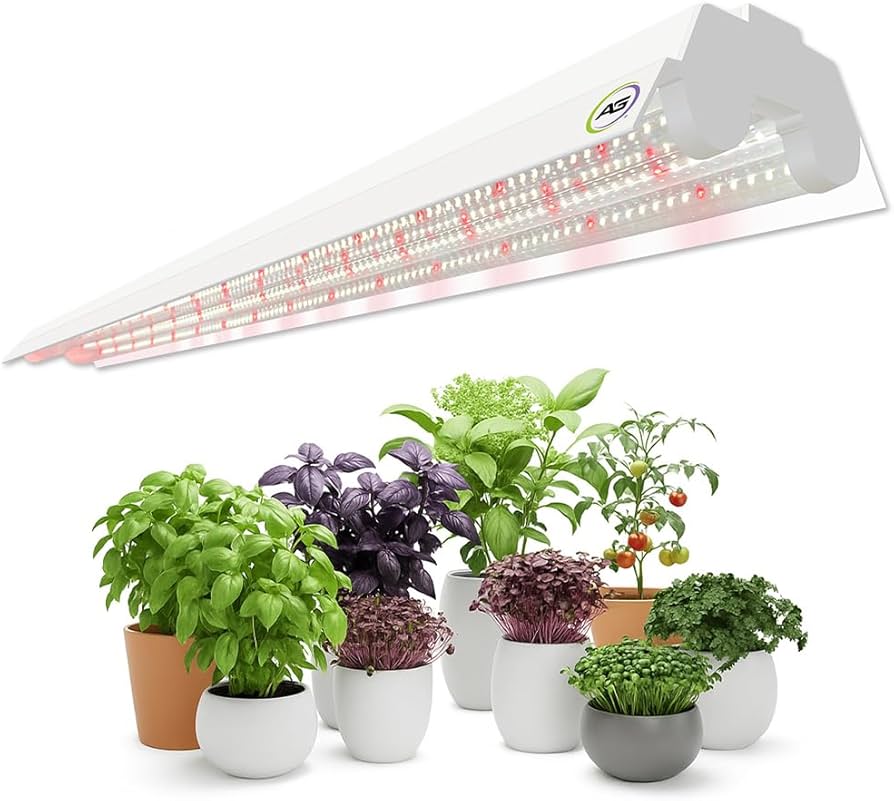
T8 LED grow lights are no longer confined to basement micro-greens or cannabis cultivations. The same 2-ft and 4-ft tubes that fit every suspended ceiling in the corporate world now deliver 2.0–2.4 µmol J-1 of photosynthetic photon flux while drawing 12–20 W. That efficiency, plus a 50 000 h L70 life and instant-on 0–10 V dimming, has opened a new design space where living plants become part of architectural lighting rather than a maintenance headache. Below are the installations we are specifying most often for hospitality, commercial real-estate and leisure clients, together with the technical details that keep the facilities manager, the interior designer and the head gardener equally happy.
Hotels: guest corridors, back-of-house corridors and spa lounges
Guest corridors are lit 24/7 at 100–150 lx for safety, but recessed troffers are usually 4000 K and heavy on blue energy. Swapping two of the four lamps in each 600 × 600 mm troffer for 4000 K T8 grow tubes (Red:Blue 4:1, 20 µmol m-2 s-1 at 1.2 m) gives enough PPFD to keep pothos, ZZ and aglaonema in perpetual “hotel green” without changing the perceived colour temperature for guests. Because the grow tubes are still 4000 K to the human eye, there is no magenta glow in the corridor mirrors. The remaining two lamps stay as standard LEDs, so when the corridor is unoccupied the control system can dim to 30 % and still deliver the minimum 8 µmol m-2 s-1 that prevents chlorosis. Power consumption drops from 36 W to 14 W per fitting, and the plants are replaced every 18 months instead of every 6. In spa lounges we surface-mount 4-ft T8 grow strips above 300 mm-high moss walls; the 30 ° aluminium reflector hides the tube from the guest’s line of sight and keeps the moss at 50 µmol m-2 s-1 for 12 h d-1, the exact dose that triggers sporophyte growth without raising space temperature more than 0.8 °C.
Offices: biophilic touchdown areas, meeting rooms and desk partitions
WELL Building v2 requires “mimicry of natural patterns” for M10 Feature 100. A 1.2 m wide planter box mounted on a 1.1 m high desk partition can be lit by two 18 W T8 grow tubes recessed in a 45 mm aluminium extrusion that doubles as a glare shield. The extrusion is angled 25° toward the foliage, so the PPFD on the top of the ficus is 80 µmol m-2 s-1 while the vertical illuminance on the desk remains below 300 lx—well inside EN 12464-1 glare limits. The spectrum is 660 nm + 450 nm + 500 nm white, giving a CRI 92 when viewed from the side so video calls do not look pink. The driver is integrated into the same trunking that feeds the task light, so only one 5-core cable is required. With a 9 h d-1 photoperiod linked to the BMS occupancy schedule, the annual energy use is 59 kWh per linear metre, 40 % less than the old 2 × 18 W T8 fluorescent plant lamps we removed. Leaf surface temperature stays < 1 °C above ambient, eliminating the need for extra HVAC.
Indoor pools and aquatics centres
Chlorine vapour corrodes ordinary LED strip coatings in months. We specify IP65 T8 grow tubes with nano-coated glass sleeves and silicone end-caps for planters around indoor pools. The 600 mm units are suspended on stainless-steel S-hooks 400 mm above areca palms and spider plants that absorb trihalomethanes. The red/blue photon ratio is 3:1, which maximises stomatal opening and therefore VOC uptake. The luminaires are on a separate 24 V circuit fed from the plant room so that maintenance can be done without entering the wet area. A mean PPFD of 60 µmol m-2 s-1 for 14 h d-1 keeps the plants at LAI 3.5, high enough for the facility to claim LEED IEQ credit 2.2 for “indoor air quality enhancement”.
Rooftop bars and restaurants with retractable roofs
In temperate climates the roof opens in summer and closes in winter, so the planting must survive both 35 °C sun and 15 °C LED light. We install 1200 mm T8 grow tubes in 40 mm recessed aluminium channels under the bar counter lip, giving 120 µmol m-2 s-1 at the herb planter surface. The tubes are 24 V DC so they can be fed from the same SELV circuit as the festoon lighting, simplifying Part P certification. A 4000 K white diode is added to the red/blue board so that basil and mint appear culinary-green to customers. The driver is DALI-addressable; after the roof closes at 10 pm the system ramps to 200 µmol m-2 s-1 for a 4-hour “night break” that prevents flowering and keeps the herbs in vegetative state all year. Energy cost is 0.6 kWh per night per 3 m of bar, less than the glycol loop that would otherwise be needed to keep the planters frost-free.
Shopping malls: pop-up green walls and concierge planters
Mall owners want 24-hour green for Instagram, but ceiling height is 4–6 m and the base building will not allow penetrations for pendant fittings. We use magnetic T8 retrofit kits that clip into the existing 600 × 600 mm grid. Two 18 W grow tubes replace the standard tubes in every third troffer, giving a scallop of 40 µmol m-2 s-1 on the top metre of a 3 m green wall. The rest of the wall is lit by 30 ° narrow-beam T8 tubes surface-mounted on the planter rim. The combined installation uses the mall’s 230 V ceiling circuit, so no new containment is required. Because the grow tubes are UL8800 horticultural rated, the fire officer accepts them in the return air plenum without extra sprinkler coverage.
Installation checklist we give to every contractor
1. Verify the existing ballast is electronic high-frequency; if not, bypass and fit 220–240 V single-end driver.
2. Maintain 150 mm clearance between the tube and any sprinkler head—PPFD above 15 µmol m-2 s-1 can delay the fusible link by 8 s.
3. Use only tubes with a declared PPF and TM-21 horticultural lumen maintenance file; generic “pink” tubes lose 40 % output in 6000 h.
4. Link the driver to the BMS so that the photoperiod cannot exceed 18 h d-1; continuous light causes photoinhibition in most foliage plants.
5. Specify shatter-proof nano-coated glass for any location within 2 m of a public walkway—IK08 rating is required under BS EN 60598-2-24.
By treating T8 LED grow lights as an extension of the architectural lighting toolkit, rather than a special horticultural add-on, we deliver living greenery that pays its way in energy savings, WELL points and guest experience—without ever showing a hint of disco pink.
Why Choose Seven Colors Lighting
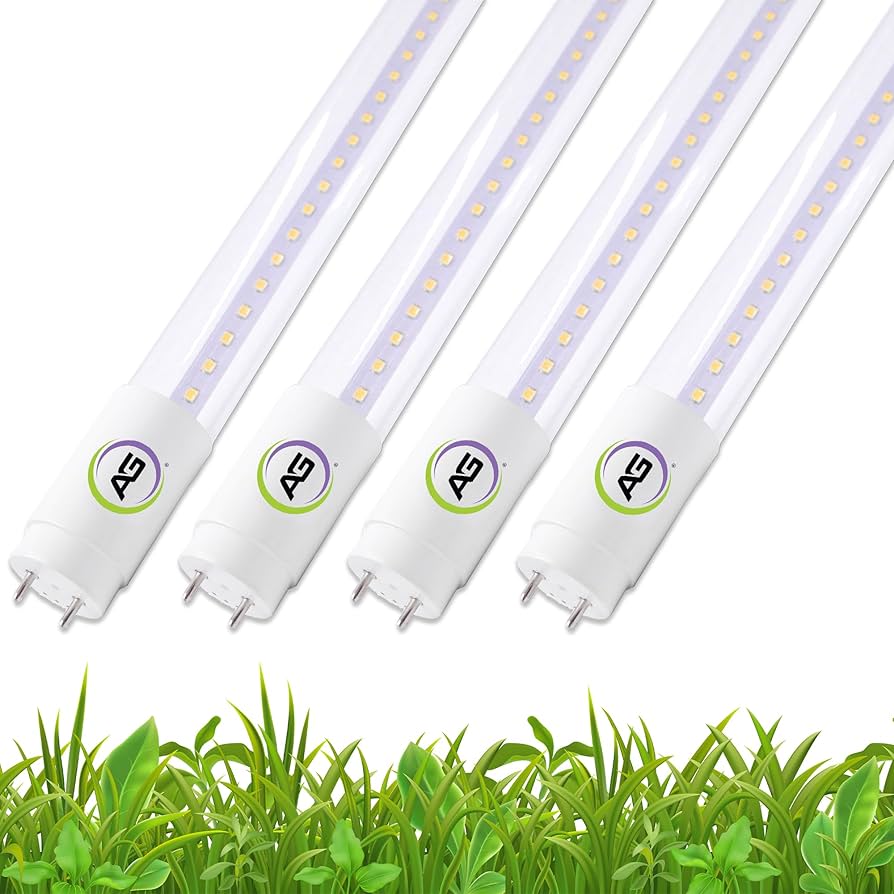
Why Seven Colors Lighting is the Strategic Choice for Scalable and Efficient Lighting Solutions
Sourcing high-quality lighting solutions for commercial or industrial projects often involves navigating complex supply chains, unpredictable lead times, and inconsistent pricing. These challenges can derail timelines, inflate budgets, and compromise project outcomes. At Seven Colors Lighting, we’ve redefined the standard for B2B lighting procurement by building a vertically integrated ecosystem designed specifically for efficiency, transparency, and scalability. Our model centers on three core pillars: a network of over 1,000 coordinated factories, factory-direct pricing, and accelerated delivery timelines. Together, these elements create a seamless partnership that transforms how businesses approach lighting procurement.
Our global manufacturing footprint spans more than 1,000 fully integrated factories, all operating under a unified quality and coordination framework. This isn’t merely a matter of scale—it’s about intelligent resource allocation. Each facility adheres to rigorous ISO-certified processes, with real-time data sharing across the network to optimize production schedules. Whether your project requires a small batch of custom fixtures or a massive rollout across multiple regions, our system dynamically assigns orders to the most suitable factory based on capacity, geographic proximity, and technical expertise. This eliminates bottlenecks, ensures consistent quality, and provides the flexibility to scale up or down without compromising deadlines. For project managers dealing with tight windows or fluctuating demand, this level of coordination means fewer surprises and greater control over outcomes.
Pricing transparency is another critical advantage of our model. By eliminating third-party distributors and brokers, we operate on a true factory-direct basis. This means you pay only for the cost of materials, manufacturing, and logistics—without hidden markups or inflated margins. Our pricing structure is built on volume-driven efficiencies and direct factory access, allowing us to offer competitive rates even for specialized or high-volume orders. For businesses focused on maintaining healthy profit margins, this transparency translates to predictable budgeting and the ability to reinvest savings into other areas of your project. Whether you’re a contractor managing multiple sites or a distributor expanding your product line, factory-direct pricing ensures you’re always getting the best value without sacrificing quality.
Speed is non-negotiable in today’s fast-paced construction and retail environments. Our logistics network is engineered for rapid response, leveraging strategically located factories and partnerships with global carriers to minimize transit times. Orders are processed and shipped within 24–48 hours of confirmation, with real-time tracking provided through our proprietary platform. This end-to-end visibility ensures you’re always informed about the status of your shipment, reducing uncertainty and enabling proactive planning. For projects where delays can cascade into costly setbacks, our commitment to fast delivery isn’t just a feature—it’s a safeguard for your timeline and reputation.
Partnering with Seven Colors Lighting means more than accessing products; it’s about integrating a reliable, efficient, and scalable supply chain into your operations. With 1,000+ coordinated factories ensuring consistent capacity, factory-direct pricing delivering unmatched value, and logistics optimized for speed, we remove the friction from lighting procurement. This holistic approach empowers your team to focus on innovation and execution, knowing your lighting solutions are handled with precision from production to delivery. Let us be the backbone of your next project—where efficiency and quality meet without compromise.
Contact Us
Ready to start your project? Contact Seven Colors Lighting (Maxtop Tech) today.
- Email: info@maxtoptek.com
- Tel/Fax: +86-0760-85320448
- Address: 5th Floor, NO.6 Fourth Street, Dongpai Xi Road, Xiaolan Town, Zhongshan City, China
💡 LED Power Calculator
Estimate the power supply needed for your project.
