 Skype Me
Uncategorized
Led Diffusers Manufacturer Guide
Dec
Catalog
Industry Insight: Led Diffusers
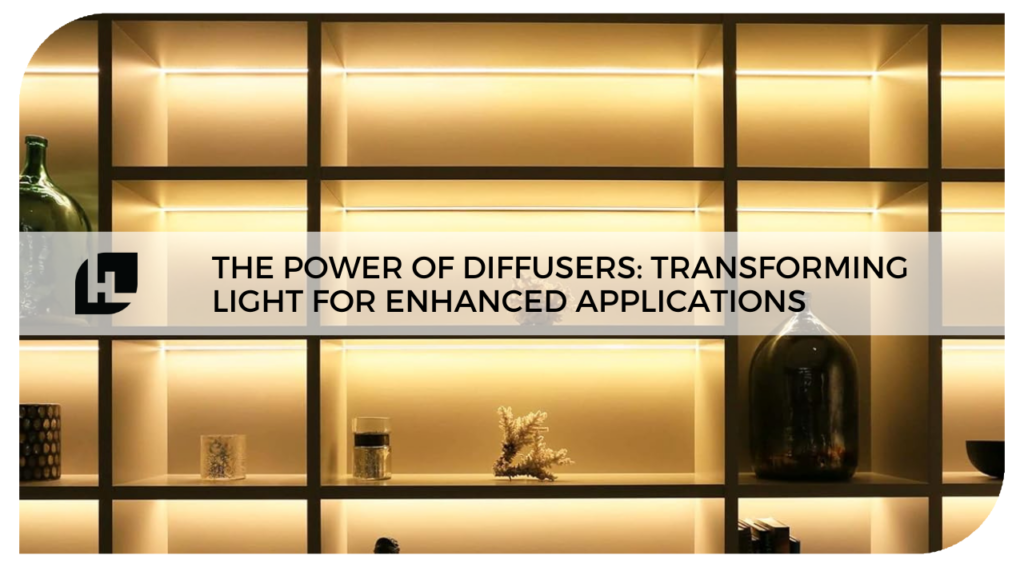
When an LED board leaves the production line, it is already a precision component, but it is not yet a finished lighting product. The final character of the luminaire—its uniformity, its glare control, its ability to hide individual diodes from view—is decided by the last layer the light must pass through: the diffuser. At Seven Colors Lighting, a factory that has grown out of the competitive Zhongshan lighting cluster since 2009, we treat that layer as a discipline of its own. Our 18,000 m² campus in Guzhen Town houses a dedicated polymer R&D wing, in-house extrusion lines that can reach 280 °C for high-clarity PC, and Class-1000 clean rooms for laser micro-structuring. Those assets let us move from optical simulation to full-scale production in under four weeks, whether the brief is a 0.5 mm opal film for a panel light or a 3 mm prismatic sheet that must survive a 650 °C glow-wire test. For engineers who need more than a catalog part, the following guide explains how diffuser geometry, material grade, and surface treatment interact with LED pitch, lumen density, and beam angle—and how we use Zhongshan’s vertical supply chain to turn that knowledge into a custom solution at factory-direct cost.
Technical Specifications
In commercial lighting applications, the diffuser is often overlooked as a mere protective cover, but its technical specifications directly influence the quality, efficiency, and adaptability of the entire fixture. As a Senior Lighting Engineer at Seven Colors Lighting, I can attest that the right diffuser isn’t just about aesthetics—it’s a critical component that shapes how light interacts with spaces, affects visual comfort, and ultimately determines the success of a project. Let’s explore how high CRI performance, energy efficiency, and customization capabilities define modern diffuser design for commercial installations.
High CRI performance is non-negotiable in environments where color accuracy matters—retail displays, art galleries, healthcare facilities, and hospitality venues. A diffuser with poor color rendering can distort hues, making products appear dull or unnatural. Our diffusers are engineered using precision polymer blends that minimize light absorption and scattering, ensuring consistent color rendering indices above 95. This means skin tones in a boutique hotel lobby appear warm and inviting, or fresh produce in a supermarket retains its natural vibrancy. The optical clarity of our materials preserves the spectral integrity of LED light, eliminating the yellowing or color shift common in lower-grade plastics over time.
Energy efficiency is another cornerstone of commercial lighting design, and diffusers play a surprisingly pivotal role. Traditional materials can absorb 10–15% of emitted lumens, forcing fixtures to compensate with higher wattage to achieve target illuminance levels. Our diffusers leverage advanced optical engineering to reduce this loss to under 5%, maintaining higher lumen output per watt. This isn’t just theoretical—it translates to measurable energy savings. For example, a high-bay warehouse retrofit using our diffusers achieved 12% lower energy consumption while maintaining uniform light distribution across the space. Thermal management is also integrated into the design; materials like polycarbonate and PMMA are selected for their stability under prolonged operation, preventing heat buildup that could degrade LED performance.
Customization is where commercial projects truly differentiate themselves. Every space has unique challenges—whether it’s a curved ceiling in a modern museum, a narrow corridor requiring precise beam control, or an outdoor canopy needing weather-resistant properties. At Seven Colors Lighting, we collaborate directly with clients to tailor diffusers down to the finest detail. Material choices range from optical-grade PMMA for maximum clarity in display cases to flame-retardant polycarbonate for industrial settings. Surface treatments like frosted, prismatic, or micro-lens patterns can be applied to achieve specific light distribution curves—soft diffusion for ambient lighting or directional control for task areas. Geometry is equally flexible; we produce flat, domed, or complex 3D shapes to fit bespoke fixtures without compromising structural integrity.
Crucially, we understand that innovation requires flexibility. Many suppliers impose high minimum order quantities that stifle creativity or increase risk for early-stage projects. At Seven Colors Lighting, we offer small batch production starting from just 50 units. This allows architects and lighting designers to prototype concepts, test real-world performance, and iterate quickly without significant upfront investment. Whether you’re refining a custom fixture for a high-end retail chain or validating a new design for a hospitality client, our low MOQ model ensures you can move from concept to installation with confidence.
In commercial lighting, the diffuser is far from a passive component—it’s a strategic element that shapes the entire lighting experience. By prioritizing high CRI, energy efficiency, and adaptable customization, we empower our partners to deliver exceptional, future-proof solutions. For projects demanding precision and flexibility, contact our engineering team to explore how tailored diffuser solutions can elevate your next commercial installation.
Application Scenarios
LED Diffusers: Where the Light Actually Happens
A field guide for specifiers who hate callbacks
-
The 30-second refresher
An LED diffuser is not a “plastic cover.” It is an engineered optical layer that turns a string of glaring point sources into a uniform luminance plane. Pick the wrong profile or material and you will deliver scallops, hot spots, 30 % output loss, or—worst of all—an angry facilities manager. Pick the right one and the fixture disappears; only the architecture remains. -
Performance levers you can trade
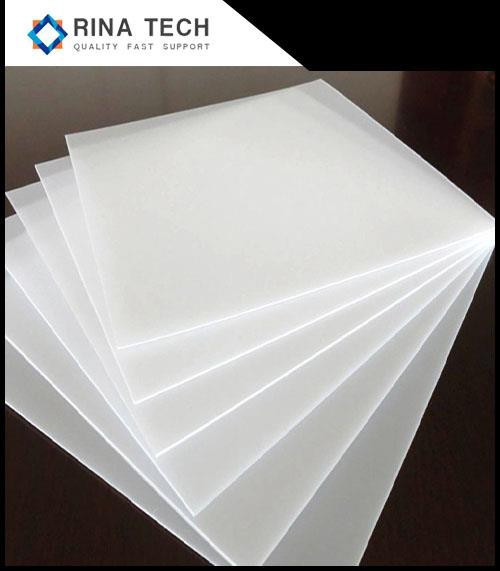
• Transmission vs. obscuration: Milky PC films (0.3 mm–1.0 mm) give 92 % transmission but need ≥ 15 mm LED pitch to hide dots. Micro-prism PMMA sheets drop 8–12 % light but can hide 8 mm pitch at half the depth.
• UV & chlorine resistance: For natatoriums or marina boardwalks, go PVDF or co-extruded UV-PMMA; standard PC will yellow 3 ΔE in 18 months.
• Fire class: Hotels and high-rises in the EU now ask for EN 13501-1 B-s1-d0; in North America it’s UL 94 V-0 at 1.5 mm or better.
• Thermal cap: Diffusers mounted within 25 mm of mid-power LEDs see 65–70 °C. Use grades with ≥ 125 °C Vicat or you’ll get warpage and “cob-webbing.” -
Cheat-sheet: where to put which diffuser
Hotels & Hospitality
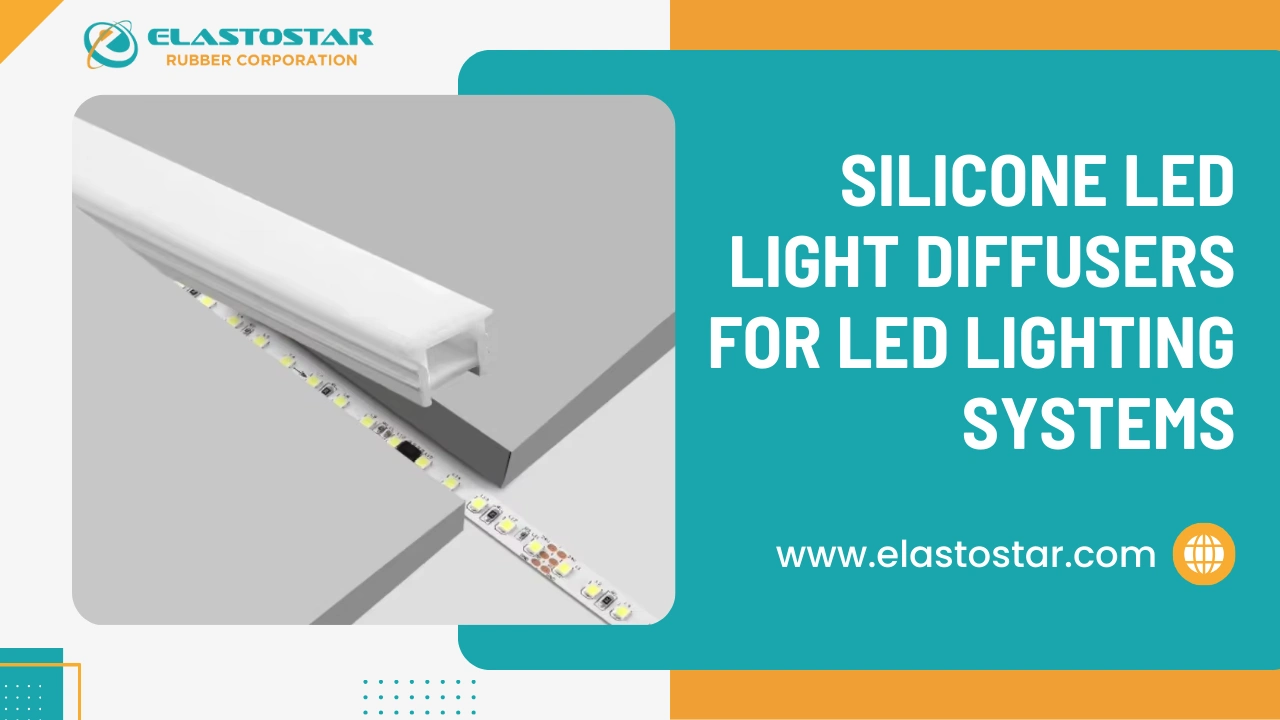
Guest-room coves: Use 60 % transmission micro-prism PMMA in a 15 mm aluminum profile. Gives a 120° batwing distribution so the ceiling appears evenly washed even when the guest is lying in bed.
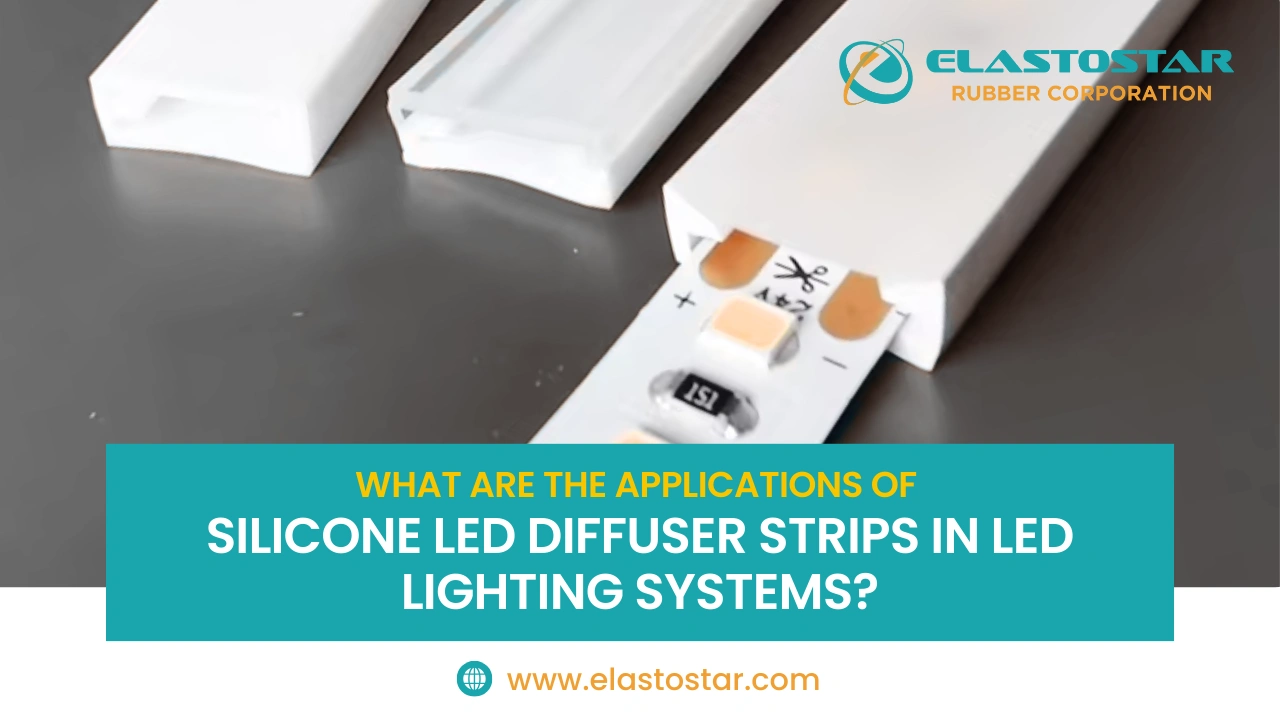
Bathroom mirror perimeter: 4 mm opal silicone sleeve slipped over a 2835 strip. IP65, 1.5 kV anti-static coating—no dust attraction, no dark spots for the Instagram selfie.
Corridor bulkhead: Co-extruded PC with 0.8 W/m-K thermally conductive filler. Lets you run 24 W/m without additional heat-sinking, keeping plenum temps below 50 °C so the fire damper isn’t triggered.
Corporate Offices
600 × 600 mm troffer retrofit: Drop-in acrylic LGP (light-guide plate) with laser-dot extraction and 95 % reflective film on the back. You get 4 000 K, UGR < 19, and 130 lm/W at the luminaire level—good enough for WELL Feature L03.
Linear pendants over bench desks: 30 mm-wide nano-cell polycarbonate diffuser, 0.5 mm pitch micro-louvers embedded. Cuts high-angle glare to < 15 cd/m² at 65°, satisfying EN 12464-1 for VDT work.
Raised-floor uplight: Use 2 mm semi-clear PMMA with a 20 % matte print on the top surface. Employees see a soft glow; the ceiling gets 300 lx uniformity 0.7—no need to over-light the whole open office.
Healthcare
Patient-room reading strip: Extruded PET with diffused top and clear side wings. Integral click-in lens can be swapped for 3 000 K or 4 000 K without tools—same extrusion, different night-shift comfort.
MRI suite: Non-magnetic polycarbonate with copper-free pigments. Passed 7 T magnetic field test (no torque) and 2 kV dielectric to protect the imaging coils.
Clean-room troffer: Anti-static, clean-room class ISO 5, 3 mm PMMA with sealed edges. Surface resistivity 10⁹ Ω/sq; IPA wipes don’t craze it.
Pools & Spas
Underwater niche: UV-stabilized, low-creep PEEK film (0.25 mm) bonded to 316L frame. Handles 35 °C chlorinated water plus 150 W/m LED load for 50 000 h.
Ceiling above water: Use closed-cell silicone diffuser tube; chlorine off-gas can’t penetrate, so no embrittlement. Mount on stainless cable trays, pitched 5° so condensate drains to gutter.
Perimeter deck: IP67 linear profile with 5 mm tempered glass top and internal opal sleeve. Load rating 1 500 N point load—sunbather-proof.
Retail & Museums
Shelf-edge glare: 6 mm acrylic with elliptical prism (1 × 2 mm pitch). Puts 600 lx on vertical cereal boxes but keeps luminance below 3 000 cd/m² at 1.6 m eye level—no reflected glare on security camera.
Track-spot retrofit: Clip-on 20° honeycomb diffuser film reduces beam glare from 45 cd/klm to 8 cd/klm; CRI shift < 1 point, so Gucci red stays Gucci red.
Artifact case: Low-iron glass laminated with 0.1 % UV-blocking diffuser interlayer. Keeps lux at 50, UV < 10 µW/lm, meets CIBSE LG8 for light-sensitive pigments.
Transportation
Aircraft cabin aisle: Lightweight 0.5 mm polycarbonate with FAA 25.853(a) burn certification. Saves 8 kg per A320 compared with standard 2 mm PMMA.
Railway platform canopy: 3 mm UV-PC co-extrusion with anti-graffiti hard coat. Withstands 2.5 kV impulse from overhead catenary and wipes clean with acetone.
EV charging station totem: Double-wall diffuser, 10 mm clear PC outside, 2 mm opal PC inside. IK10 impact rating stops a 5 J vandal hammer; internal layer hides LEDs so the logo never pixelates.
Industrial & Cold Chain
-25 °C freezer aisle: Use impact-modified PMMA (–40 °C brittle temp). Standard PC goes brittle at –10 °C and will crack when the forklift bumps it.
High-bay 30 m warehouse: 2 mm fluorinated-acrylic diffuser with 98 % reflectance aluminum backing. Achieves 1.2 spacing-to-height ratio, so you delete one row of 200 W fixtures—payback in 14 months.
-
Installation details that save your margin
• Snap-calculate LED pitch: p ≤ 2 d × tan(θ/2), where d = diffuser-to-LED distance and θ = 50 % of the diffuser’s full-width half-maximum angle. For a 100° diffuser at 15 mm, p ≤ 17.6 mm. Round down to 15 mm and you’re safe.
• Allow 1 mm thermal expansion gap per 1 m length for PC/PMMA; silicone end-caps absorb the movement so the lens doesn’t “pill” out of the profile.
• For IP65 and higher, use a co-extruded gasket (TPE or silicone) bonded to the diffuser; never rely on a clip-on gasket that can fall off in the truck.
• When you need 0.1 % UV block, specify it on the data sheet—don’t trust “UV stabilized.” The former blocks 280–380 nm; the latter only slows yellowing. -
Quick pick table (print this)
Application → Recommended Grade → Key Cert → Typical Transmission
Hotel cove → Micro-prism PMMA 1.5 mm → EN 13501 B-s1-d0 → 60 %
Office troffer → LGP acrylic 4 mm → UL 94 V-2 → 85 %
Pool ceiling → Silicone tube 3 mm → RoHS, IK08 → 55 %
Retail shelf → Elliptical PMMA 6 mm → UL 94 HB → 75 %
Freezer aisle → Impact PMMA 2 mm → –40 °C brittleness → 80 % -
Take-away
An LED diffuser is the last 5 % of the bill of materials that determines 50 % of the user experience. Match the optical class to the application, certify the environmental add-ons up front, and you will never have to explain hot spots—or worse, a yellowed lobby ceiling—to a client again.
Why Choose Seven Colors Lighting
Why Seven Colors Lighting is Your Strategic Partner for Scalable, Cost-Effective Lighting Solutions
In today’s competitive lighting market, businesses face relentless pressure to balance quality, cost, and speed. Procurement teams often juggle fragmented supplier networks, unpredictable lead times, and hidden costs that erode margins and delay projects. At Seven Colors Lighting, we’ve built a solution rooted in operational excellence—not just as a supplier, but as a true extension of your team. Our integrated manufacturing and logistics ecosystem addresses these challenges head-on, delivering unmatched reliability for commercial and industrial lighting needs.
Our network of over 1,000 coordinating factories is the backbone of our service. This isn’t merely a numbers game—it’s a strategic alliance of specialized facilities across China and Southeast Asia, each validated for ISO certifications, environmental compliance, and rigorous quality control protocols. By synchronizing production across this diverse network, we eliminate single-point failures and ensure seamless scalability. Whether you need a small batch of custom fixtures or a large-scale order for a global retail rollout, our system dynamically allocates workloads to the optimal factory. This coordination means consistent quality, reduced bottlenecks, and the ability to adapt to sudden demand shifts without compromising timelines.
Factory direct pricing is another cornerstone of our value proposition. By eliminating third-party distributors and middlemen, we pass the savings directly to you. This isn’t just about lower unit costs—it’s about transparency. You receive clear, itemized quotes with no hidden fees or unexpected markups. Our vertically integrated model ensures every component, from raw materials to finished products, is managed under one oversight structure. This allows us to optimize costs at every stage while maintaining strict adherence to your specifications. For businesses operating on tight budgets or competitive bids, this direct relationship translates to predictable pricing that supports long-term financial planning and margin stability.
Speed is non-negotiable in modern supply chains, and our delivery performance reflects this priority. Through strategically located regional warehouses and partnerships with global logistics providers, we’ve compressed lead times without sacrificing reliability. Orders are processed in real-time through our digital platform, with automated tracking from production to your doorstep. For urgent projects, we offer expedited shipping options that often outpace traditional suppliers by 30–50%. This agility isn’t accidental—it’s engineered into our operations. Our factories are designed for rapid turnaround, and our logistics team works around the clock to navigate customs, reduce transit delays, and ensure on-time arrivals even during peak seasons.
Partnering with Seven Colors Lighting means more than accessing a supplier—it means gaining a collaborative ally committed to your success. Our 1,000+ factory network, factory direct pricing model, and fast delivery capabilities work in unison to reduce risk, lower costs, and accelerate your time-to-market. Whether you’re launching a new product line or managing a high-stakes infrastructure project, we provide the consistency and responsiveness your business demands. Let’s discuss how our integrated approach can elevate your lighting procurement strategy. Contact us today to explore a partnership built for results.
Contact Us
Ready to start your project? Contact Seven Colors Lighting (Maxtop Tech) today.
- Email: info@maxtoptek.com
- Tel/Fax: +86-0760-85320448
- Address: 5th Floor, NO.6 Fourth Street, Dongpai Xi Road, Xiaolan Town, Zhongshan City, China
💡 LED Power Calculator
Estimate the power supply needed for your project.
