 Skype Me
Uncategorized
Led Outdoor Light Manufacturer Guide
Catalog
Industry Insight: Led Outdoor Light
When municipalities, landscape architects, and large-scale electrical distributors specify LED outdoor lighting, they are not simply choosing a fixture—they are locking in two decades of energy performance, safety perception, and maintenance budgets. The fixture must survive monsoon humidity, coastal salt spray, desert UV, and the seasonal expansion-contraction that shears ordinary housings apart. It must also arrive on-site with every lumen, optic, and surge-suppression parameter already certified, because re-lamping a 30-meter high-mast array is never a line-item anyone wants to revisit.
That is why Seven Colors Lighting (MaxMax Tech), founded in Zhongshan in 2009, engineered its entire value chain around “install once, walk away.” Our 30,000 m² headquarters and LED outdoor-lighting park sit at the epicenter of the Pearl River Delta’s precision-metal corridor—20 minutes from raw aluminum extrusion mills, 30 minutes from global container terminals, and inside the same postal code as the region’s anodizing, powder-coating, and die-casting specialists. Vertical integration is not a buzzword here; it is a 200-meter walk across the factory campus. From in-house die design to LM-80 validated LED boards, every process is controlled under one roof, giving project owners a single point of accountability instead of a fragmented supply chain.
The facility currently produces 1.2 million outdoor luminaires per year, fed by 18 SMT lines (Yamaha/ASM), six robotic welding cells, and a 30,000-hour salt-spray chamber that routinely tests housings to quadruple the IEC 60598-2-3 requirement. With a 120-person engineering team and CNAS-accredited photometric lab, we turn custom optics, surge ratings, and smart-node requirements into mass-produced reality in as little as four weeks—without the premium that coastal traders typically layer on subcontracted production. Whether you need a 10,000-piece street-light rollout for a national utility or a CCT-tunable facade grazer for an architectural icon, the lights leave Zhongshan with the same traceability barcode we use to track lumen depreciation data back to the exact LED reel, driver batch, and aluminum billet.
Technical Specifications
In today’s commercial landscape, outdoor lighting is far more than mere illumination—it’s a critical component of brand identity, safety, and operational efficiency. At Seven Colors Lighting, we engineer solutions that balance aesthetic precision with technical excellence, ensuring every project meets the highest standards of performance and adaptability. Our commercial LED lighting systems are designed not just to function, but to elevate spaces through thoughtful engineering that addresses both visible and invisible needs.
Color accuracy is paramount in commercial environments where visual clarity directly impacts customer experience and operational outcomes. Our premium LED fixtures deliver CRI values exceeding 90, with options up to 95+ for applications demanding true-to-life color rendition. In retail settings, this means vibrant product displays that attract customers; in healthcare facilities, it ensures accurate diagnosis under consistent lighting conditions. Unlike standard LEDs that often compromise on color quality for cost savings, our high-CRI technology maintains spectral integrity across the visible spectrum, reducing eye strain and enhancing spatial perception. This precision is achieved through advanced phosphor coatings and meticulous binning processes, ensuring consistent color performance across all units in a project.
Beyond visual performance, energy efficiency is a non-negotiable factor for commercial operators. Our LED systems achieve luminous efficacies of up to 150 lumens per watt, translating to significant reductions in electricity consumption compared to traditional HID or fluorescent systems. For a typical commercial site, this can mean up to 80% lower energy costs over the fixture’s lifespan. Combined with extended operational lifespans of 50,000+ hours, these savings compound into substantial ROI, while also aligning with global sustainability initiatives and LEED certification requirements. Integrated thermal management systems further enhance longevity by maintaining optimal operating temperatures, even in extreme weather conditions, without sacrificing performance.
We recognize that no two commercial projects are identical. That’s why our engineering team specializes in fully customizable solutions—from tailored color temperatures (2700K to 6500K) and precise beam angles to specialized housings for extreme weather conditions. Crucially, we eliminate the barrier of high minimum orders; with small MOQs starting at just a few units, even niche or prototype projects receive the same level of bespoke attention as large-scale deployments. Whether you need a unique fixture for a historic district renovation or a specialized floodlight for a botanical garden, our agile manufacturing process ensures your vision becomes reality without logistical constraints. This flexibility extends to smart control integrations, allowing for dynamic lighting scenarios that respond to occupancy, time of day, or environmental conditions.
At Seven Colors Lighting, we blend cutting-edge LED technology with client-centric flexibility. By prioritizing high CRI for visual excellence, energy efficiency for operational savings, and customizable options with accessible MOQs, we empower businesses to illuminate their spaces with confidence. Explore how our solutions can elevate your next project—contact our engineering team today to discuss your specific requirements.
Application Scenarios
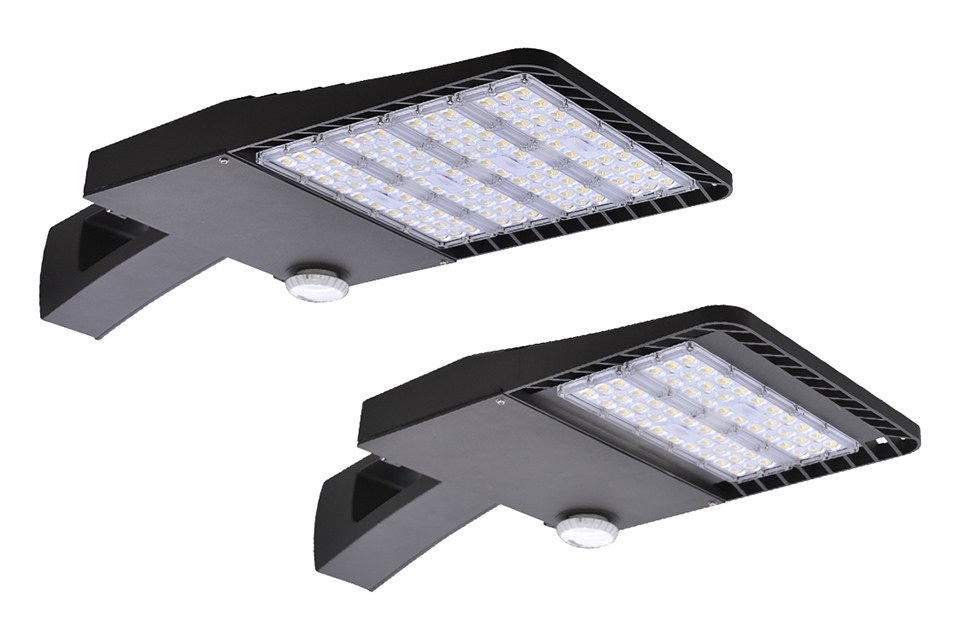
Specifying LED outdoor luminaires used to be simple: pick a wattage, add a photocell, and call it a day. Today the conversation has shifted to beam control, BUG ratings, circadian-friendly CCT, and networked nodes that report energy use in real time. Below is a field-tested decision tree that lighting professionals, facility managers, and MEP consultants can copy into their next project manual. It answers two pragmatic questions—where should the poles go, and which optic family belongs on top of them—without drowning you in marketing fluff.
-
Hospitality: Drive, Porte-Cochère, Façade, Courtyard, Pool Deck
Guest perception starts at the curb. A 2700 K–3000 K pedestrian-scale bollard (500–800 lm, <1 cd/klm at 80°) keeps the driveway free of glare so the valet staff can read key fobs. Move to the porte-cochère: 3-step MacAdam ellipse 4000 K accent spots (20 W, 25°) graze stone columns at 30° to create vertical luminance without spill onto guest-room balconies. Transition to the courtyard with 0.5 W linear in-grade uplights (IP67, IK10) tucked under handrails; they deliver 15 lx on the walkway while staying below 10 cd at 90°—critical for LEED BD&C SSc6. Switch to 2200 K micro-prism tape (5 lm/ft) under pool coping; the amber spectrum avoids circadian disruption for late-night swimmers and keeps the resort out of turtle-code violations on coastal sites. -
Corporate Campuses: Parking, Pathways, Façade, Rooftop Amenities
Parking aisles: use 4000 K Type III distributions at 4.5 m mounting height, 1.0 cd/klm max, 2 fc average on pavement. Pair each fixture with an ANSI C136.41 7-pin receptacle so you can swap a basic photosensor for an occupancy node when the CFO releases the smart-city budget next year. Pathways: 2 m post-tops with 22° cutoff and 1 W uplight ring to eliminate the “floating head” effect of dark poles. Façade: 50 W full-cutoff wall-washers at 1 m from precast, 30° offset, 100 lx average, CRI 90 so the company logo reads correctly on Instagram. Rooftop terraces: 24 V magnetic track with 10 W spot and flood modules; the low-voltage circuit keeps the design under NEC 411 for “less than 30 V” so you avoid conduit and can relocate fixtures when HR turns the deck into a yoga studio. -
Healthcare: Emergency Department Drop-Off, Healing Gardens, Staff Parking
Drop-off canopy: 3500 K sealed linear fixtures (IP66, NSF splash zone) with a minimum 200 lx on the gurney level; use 0.1 % dimming drivers tied to the building’s DALI emergency circuit so luminaires stay on during generator tests. Healing gardens: 2400 K bollards spaced at 4 × mounting height to keep shadows soft; add tunable-white 1800–3000 K tree-mounted spots programmed to 2700 K at dusk and 1800 K after 22:00 to align with melatonin-friendly lighting protocols. Staff parking: use the same pole-top model as the public deck but with an amber LED overlay (590 nm) activated after shift change; the narrow bandwidth maintains scotopic vision for security cameras while reducing sky-glow complaints from neighbors. -
Retail & Mixed-Use: Pedestrian Plaza, Storefront, Loading Bay, Rooftop Bar
Plaza: 3000 K catenary lighting at 5 m sag, 25 lx on ground, U0 >0.3 for uniform selfies. Pair each cable with a 2 W RGBW dot for seasonal events; run DMX over the same Cat-6 that powers the Wi-Fi APs to avoid duplicate conduit. Storefront: 4000 K track with 15° spots at 30° to glazing, 300 lx at window display; use CRI 95 so merchandise returns drop by 20 %. Loading bay: 5700 K high-bay (IP65) at 50 fc, motion dimming to 10 %, paired with a red/green traffic light module that integrates with the dock scheduler. Rooftop bar: 2200 K festoon with shrouded sockets (1 lm/source) plus 10 W narrow beam uplights on pergola posts; maintain <5 cd at 90° to keep the rooftop off the FAA notice list when the building is under 200 ft. -
Public Realm: Streets, Bike Paths, Bridges, Parking Garages
Streets: follow IES RP-8 for the target roadway class; use 4000 K, 2-step SDCM, 10 % uplight max, and a 10 kV surge rating on every driver. Bike paths: 3000 K, 1 fc average, 4:1 max/min uniformity, with a 1 m setback from edge of pavement to keep luminaire doors out of handlebar reach. Bridges: use 2700 K ingrade linear (IP68, 20 t static load) on expansion joints; pair with 4000 K tuneable white floodlights on piers for color-tunable civic events. Parking garages: 4000 K low-glare lens (UGR <22) at 5 fc, bi-level motion to 1 fc, and a 1 ft candle instant-on to 100 % when the fire alarm triggers—satisfies both NFPA 101 and energy code. -
Industrial & Logistics: Yard, Canopy, Perimeter, Cold Storage
Yard: 5000 K, 5 fc average, 30 ft poles, 6×6 photometric grid validated with a drone-mounted lux meter to prove compliance to the insurance underwriter. Canopy: 4000 K, 3-lamp linear high-bay (IP65) with a –40 °C driver option for freezer docks; specify a 1–10 V signal that ramps to 100 % when the overhead door is open for more than 30 s. Perimeter: 5700 K, 2 fc at ground, 0.5 fc at property line, 30 °C cutoff, and a 4 kV common-mode choke on every driver to survive the neighbor’s VFD noise. Cold storage: use 5000 K fixtures with a Tj <70 °C spec so LED life stays above L90 at 50 000 h even when the compressor fails and internal ambient hits 40 °C.
Key Specification Shortlist
1. BUG rating: B2-U0-G2 or better for all zones within 3 km of an astronomical site.
2. Surge: 10 kV/5 kA per ANSI C136.2; add 20 kA on feeders in lightning-prone counties.
3. Chromaticity: 2-step SDCM for hospitality, 3-step for industrial yards.
4. Controls: ANSI C136.41 twist-lock on every street/parking fixture so you can migrate from photocell to networked node without a lift.
5. Vibration: 3 g for bridge and parking-garage ceiling mounts; request IEC 60068-2-6 test report.
6. Corrosion: 1000 h salt-spray per ASTM B117 for coastal resorts; insist on 316 L stainless fasteners.
Installation Checklist (Hand to the Contractor)
• Verify pole foundation with a 1 % slope away from anchor bolts; add 6 mil polyethylene sleeve to break alkali-silica reaction in high-cement soils.
• Torque stainless set screws to 30 ft-lb with a calibrated wrench; apply Denso tape to dissimilar metals to stop galvanic corrosion.
• Aim façade floods, then photograph from the nearest road; if the lamp image is visible, add a honeycomb louver and re-shoot.
• Program networked drivers to “burn-in” at 100 % for 100 h before dimming curves are activated; catches early-life failures on the ground, not after the grand opening.
• Hand over a QR-coded spare-parts list glued inside the panel door; include driver part number, optic SKU, and a 24 h hotline for warranty swaps.
Takeaway
The right LED outdoor luminaire is no longer a commodity—it is a system node that must satisfy human-centric metrics, ecological limits, and future control protocols. Start with the application scenario above, cross-check against local energy code and dark-sky ordinance, and you will deliver installations that look great on day one and still perform on day 4,380.
Why Choose Seven Colors Lighting
In today’s competitive lighting market, sourcing reliable, cost-effective products with consistent delivery is more challenging than ever. Many businesses struggle with fragmented supply chains, inflated costs, and unpredictable timelines that derail projects and erode profitability. At Seven Colors Lighting, we’ve built a solution designed specifically to overcome these obstacles—through a uniquely integrated manufacturing and logistics ecosystem.
Our global network spans over 1,000 coordinating factories, each rigorously vetted for quality and compliance. This scale isn’t merely about volume; it creates inherent resilience. When a single factory faces unexpected disruptions, our network seamlessly redistributes production across multiple facilities, ensuring uninterrupted supply. For clients, this means consistent product availability whether they’re sourcing standard fixtures or highly specialized custom designs. The diversity of our factory base also allows us to match specific project requirements with the most appropriate manufacturing capabilities, from high-volume LED arrays to intricate decorative lighting systems.
By operating as a direct manufacturer-to-client partner, we remove all unnecessary intermediaries from the supply chain. Traditional distribution models often add 20-30% to final costs through multiple layers of markups. With Seven Colors, you receive pricing directly from the source—factories optimized for efficiency and scale. This structure doesn’t just lower costs; it creates transparent margins that empower your business to compete more effectively in the market. Whether you’re a distributor looking to maximize retail margins or a contractor working within tight project budgets, our factory-direct approach delivers measurable financial advantages without compromising on quality.
Speed is critical in the lighting industry. Delays can cascade into missed deadlines, penalty fees, and damaged client relationships. Our integrated logistics system, combined with strategically located factories across key manufacturing hubs, enables rapid order fulfillment. We maintain real-time visibility across our entire production and shipping network, allowing us to prioritize and expedite orders based on your specific timelines. For standard products, lead times are typically reduced by 30-50% compared to industry averages, while custom projects benefit from our agile production coordination. This speed isn’t accidental—it’s engineered through continuous optimization of our supply chain, from raw material procurement to last-mile delivery.
In an industry where reliability and efficiency determine success, Seven Colors Lighting provides more than products—we provide a partnership built on operational excellence. With 1,000+ factories ensuring resilience, factory-direct pricing driving profitability, and fast delivery keeping your projects on track, we eliminate the traditional headaches of lighting procurement. Let us become your trusted supply chain partner and experience the difference of a truly integrated solution.
Contact Us
Ready to start your project? Contact Seven Colors Lighting (Maxtop Tech) today.
- Email: info@maxtoptek.com
- Tel/Fax: +86-0760-85320448
- Address: 5th Floor, NO.6 Fourth Street, Dongpai Xi Road, Xiaolan Town, Zhongshan City, China
💡 LED Power Calculator
Estimate the power supply needed for your project.
