 Skype Me
Uncategorized
Led Street Light Factory Manufacturer Guide
Catalog
Industry Insight: Led Street Light Factory
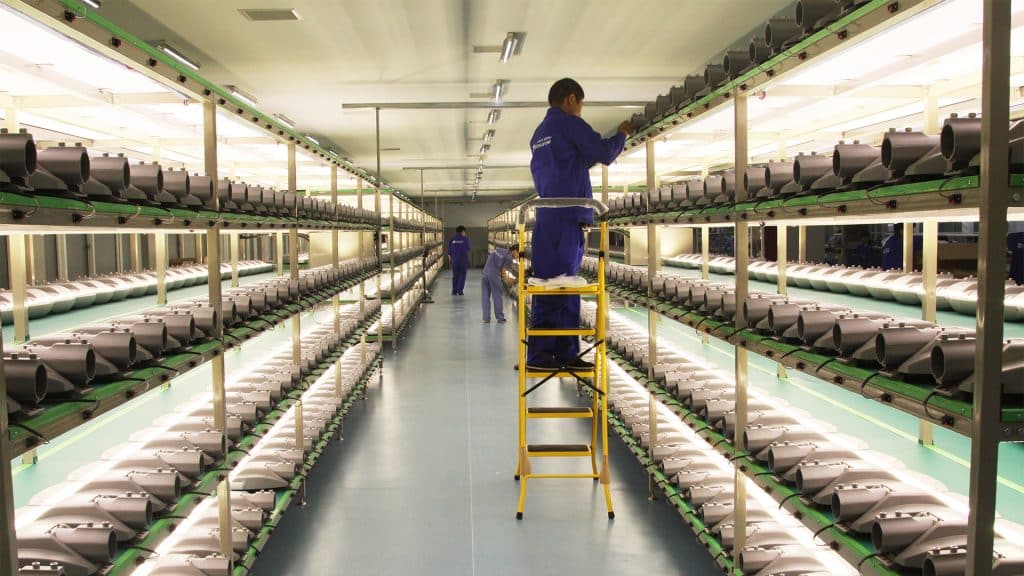
LED Street Light Factory: Inside Seven Colors Lighting’s 15-Year Manufacturing Engine in Zhongshan
When a city upgrades its street-lighting network, the fixtures that finally climb the poles often begin life on a quiet industrial block in Zhongshan, Guangdong. Since 2009, Seven Colors Lighting (Maxtop Tech) has operated from this same block, turning raw aluminum extrusions, Nichia LEDs and Mean-well drivers into the modular street lights that now illuminate highways from Santiago to Stockholm. Our 18 000 m² campus sits at the epicenter of the Pearl River Delta’s lighting cluster—within a 30-minute drive of die-casting suppliers, anodizing partners and the Port of Zhongshan—so every component we specify can be sourced, machined and inspected the same day. That proximity is not just convenient; it is the reason we can move a new optics platform from CAD file to CE/UL-certified mass production in 18 days while keeping every critical process under our own roof: tool-making, vacuum die-casting, CNC finishing, 256-station SMT, photometric goniometry and a 30 kV surge/IK10 impact lab. The result is a factory that ships more than 250 000 LED street luminaires per year, each carrying a design heritage that began when we built our first high-pressure sodium replacement for the Guangzhou Development District in 2009 and continues today with seventh-generation platforms that hit 190 lm/W at 10 kV surge immunity.
Technical Specifications
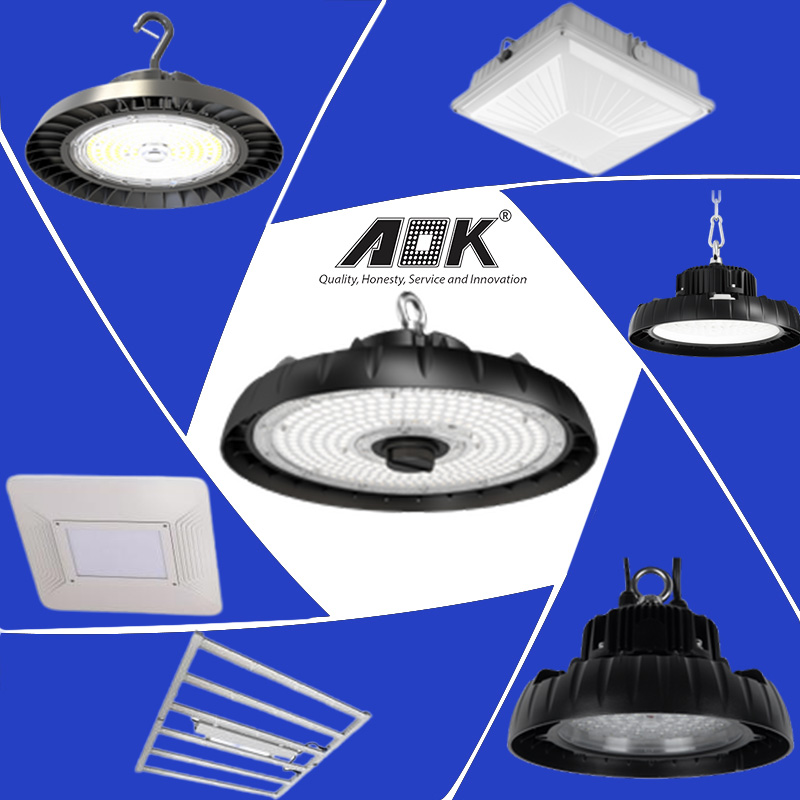
Refined Urban Illumination: Engineering High-CRI, Energy-Efficient LED Street Lights with Flexible Customization
Modern urban infrastructure demands lighting solutions that balance performance, sustainability, and adaptability. As a Senior Lighting Engineer at Seven Colors Lighting (Maxtop Tech), I’ve seen how traditional street lighting—often reliant on outdated high-pressure sodium (HPS) systems—fails to meet today’s safety, efficiency, and environmental standards. Our commercial LED street lights are engineered to address these gaps head-on, with a focus on three pillars: exceptional color rendering, superior energy efficiency, and tailored customization—delivered with unprecedented flexibility for projects of any scale.
Central to our design philosophy is High Color Rendering Index (CRI) performance. While many standard street lights operate at CRI 70–80, our fixtures consistently achieve CRI 90+ across all color temperatures. This isn’t merely a technical specification; it translates to tangible real-world benefits. Higher CRI means objects, road signs, and even human faces appear with natural, accurate hues under illumination. For municipal authorities, this reduces visual fatigue for drivers and pedestrians, enhances security by improving object recognition at night, and minimizes glare-related discomfort. In environments like school zones or historic districts, where visual clarity is critical, CRI 90+ ensures safety without compromising on light quality.
Energy efficiency remains a non-negotiable priority for cities facing rising operational costs. Our LED street lights leverage premium Samsung LM301H or Osram chips, delivering up to 160 lumens per watt—significantly outperforming legacy HPS systems by up to 60% in energy consumption. This isn’t achieved through raw power alone; it’s the result of precision thermal management. Each fixture integrates aerospace-grade aluminum heat sinks and intelligent thermal pathways to maintain optimal junction temperatures, extending LED lifespan while sustaining luminous output. When paired with optional smart controls—such as adaptive dimming based on traffic patterns or motion detection—overall energy savings can exceed 70% annually. For a typical 400W HPS replacement, this means a return on investment in under three years, even before factoring in reduced maintenance costs.
Customization is where Seven Colors Lighting truly differentiates itself. We understand that no two urban environments are identical. A highway demands a different beam pattern than a residential neighborhood, while coastal cities require corrosion-resistant housings and wildlife-friendly color temperatures to minimize ecological disruption. Our engineering team works directly with clients to tailor every aspect of the fixture: precise optical distribution for glare control, specific CCT ranges (2700K to 6500K), IP66-rated weatherproofing, and even aesthetic finishes like powder-coated colors matching municipal branding. Crucially, this level of customization isn’t reserved for large-scale deployments. We offer Small Minimum Order Quantities (MOQ) starting at just 50 units—uncommon in the industry where typical custom orders often require 200+ units. This flexibility enables municipalities to pilot projects in specific zones, test performance before full rollout, or address niche requirements without financial or logistical barriers.
For procurement managers and city planners, this approach removes the traditional trade-off between bespoke solutions and scalability. A small town can deploy a targeted upgrade to a single park with tailored beam angles and CRI 90+ output, while a larger city can integrate IoT-ready units across multiple districts with unified control systems—all from the same reliable platform. Our commitment to modular design ensures that future upgrades, such as adding wireless connectivity or adjusting light output profiles, are seamless and cost-effective.
In an era where sustainable urban development is paramount, lighting infrastructure must evolve beyond mere illumination. Seven Colors Lighting delivers street lights that are engineered for precision, efficiency, and adaptability—proving that high performance and flexibility can coexist. Whether you’re managing a pilot project or a city-wide transformation, our team is ready to collaborate on solutions that meet your exact specifications, without compromise. Let’s discuss how our technology can illuminate your next project with clarity and confidence.
Application Scenarios
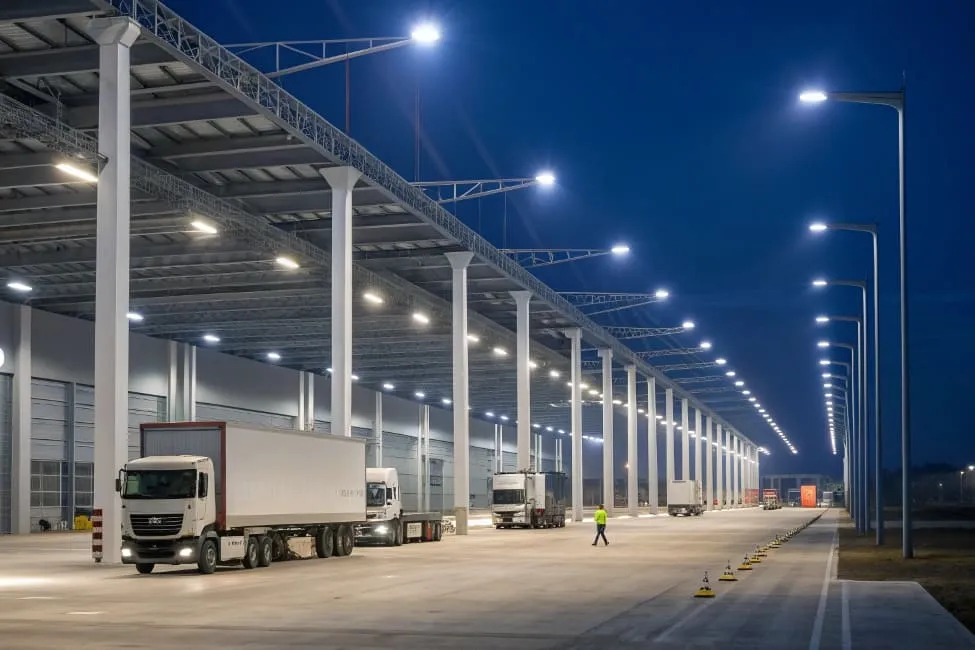
Title: From Roadway to Resort—How an LED Street Light Factory Can Specify Luminaires for Hotels, Offices, Pools, and Beyond
Introduction
When buyers hear “LED street light factory,” they instinctively picture 10-meter poles on a six-lane arterial road. Yet the same IP66/IK10 optical engines, constant-current drivers, and 170 lm/W chips that tame highways are quietly becoming the workhorse of non-road applications. Below is a field-tested decision tree that lighting wholesalers, EPC firms, and facility managers can use to match a street-level product family to hotels, corporate campuses, leisure parks, and other off-street sites—without redesigning the luminaire from scratch.
-
Start With the Optic, Not the Housing
A modern street-light platform is essentially a modular radiator plus a choice of lenses. Factories ship the same heat sink with 30 × 70°, 90 × 90°, 120 × 120°, or Type II/III/IV road distributions. Swapping the lens converts a roadway optic into a wall-wash, a façade grazer, or a wide-area flood. Keep the driver and LED board identical and you retain factory pricing, stock availability, and 5–10 year warranty terms. -
Hotels: Driveway, Porte-Cochère, and Perimeter
Lux-level target: 10–30 lx average, 0.25 minimum uniformity.
Mounting height: 4–6 m on decorative arms or 3 m post-top.
Specification move: Order the street-light head with a 90 × 90° lens and 2700–3000 K CCT. The wide beam fills the driveway without the scalloping caused by narrow spotlights. Integrate a Zhaga socket for 1–10 V or DALI dimming; drop output to 20 % after 23:00 to meet LEED “light-at-night” credits. Finish: polyester powder coat to match hotel RAL palette—factories will dual-brand the housing with the hotel logo for a 500-unit MOQ. -
Corporate Campuses: Parking Lots and Pedestrian Spine
Lux-level target: 20 lx for active parking, 5 lx for pedestrian spine, 0.4 uniformity.
Pole distance: 5–6 × mounting height.
Specification move: Use Type III 4000 K optics on 8 m composite poles. Add an NEMA 7-pin receptacle so the same luminaire can accept either a motion sensor or a CCTV node next season. Because the factory already lists 20 W–200 W in the same family, you can step from 8 000 lm (perimeter) to 24 000 lm (core parking) without changing the BIM object—critical when the landlord phases construction. -
Outdoor Pools and Waterparks
Lux-level target: 100 lx for competition lap lanes, 30 lx for recreational deck, 10 lx for lazy river.
Critical constraint: IP66 and >2 kV surge immunity because chlorinated mist is highly conductive.
Specification move: Specify marine-grade 316 L stainless fasteners and a nano-coating on the lens; both are catalog options from any tier-one LED street light factory. Mount on 6 m “towel-friendly” poles set back 3 m from the water edge; choose an asymmetric 60 × 120° lens that throws light forward instead of sideways, eliminating glare for lifeguards. Pair with a 0–10 V pool-panel dimmer; color-temperature shift to 3500 K at dusk creates a resort ambiance while still meeting IES RP-6 safety values. -
Retail Loading Bays and 24-Hour Logistics Hubs
Lux-level target: 50–75 lx at grade, 25 lx between trailers.
Operational twist: high-mast (12–18 m) but narrow aisle widths.
Specification move: Order the street-light head with a 30 × 70° Type II optic and a 10 V surge suppressor. The tight lateral control puts lumens between trucks, not into the sky. Because the factory driver is already 480 V rated, you avoid the $80 step-down transformer that a 120 V floodlight would require. Request a programmable DALI driver; set three scenes—unloading (100 %), idle (40 %), and security patrol (10 %). -
Public Parks and Botanical Gardens
Lux-level target: 5 lx for walkways, 15 lx for playgrounds, 0.2 uniformity.
Dark-sky requirement: U0 (0 % flux above 90°).
Specification move: Use the same street-light core with a 2200 K PC Amber LED board—many factories stock this as a “turtle-friendly” SKU. Pair with a 4 m brown powder-coat pole to blend with foliage. The amber variant reduces sky-glow by 60 % compared to 3000 K while still delivering 140 lm/W. -
Airfields: Perimeter Road and Car-Rental Return
Lux-level target: 30 lx average, 0.3 uniformity.
Regulatory note: FAA AC 150/5345-50B for light-base height and frangibility.
Specification move: Use a 48 V DC driver version so the luminaire can run on the airfield’s central DC bus (common in LED taxiway installations). The factory simply swaps the AC driver PCB for a DC constant-current board—same housing, same optic, same tooling. -
Quick Specification Checklist
- Optic family: 30 × 70°, 60 × 120°, 90 × 90°, Type II/III/IV
- CCT: 2200 K PC Amber, 2700 K, 3000 K, 3500 K, 4000 K
- Finish: RAL palette, marine-grade 316 L hardware, nano-coating
- Control: 0–10 V, DALI, NEMA 7-pin, Zhaga socket, motion sensor
- Surge: 2 kV (urban), 6 kV (industrial), 10 kV (coastal)
- Certification: UL/cUL, CE, CB, ENEC, IK08–IK10, IP66, 3G vibration
Closing
An LED street light factory is no longer a single-use vendor; it is a thermal and electrical platform that can be re-lensed, re-finished, and re-driven for any outdoor space that demands high efficacy and long life. By starting with the optic map and a short list of catalog options, specifiers can cover everything from a five-star resort driveway to a 24-hour cargo hub—while keeping spares, warranties, and pricing aligned under one part-number family.
Why Choose Seven Colors Lighting
In today’s fast-paced commercial and industrial projects, lighting procurement challenges can derail timelines and budgets. Supply chain disruptions, inconsistent quality, and unexpected costs are common pain points for businesses scaling their operations. That’s why partnering with a supplier who understands the complexities of modern lighting demands is critical. At Seven Colors Lighting, we’ve built a foundation designed to eliminate these hurdles through a uniquely integrated approach to manufacturing, pricing, and delivery.
Our global network of over 1,000 coordinated factories is the backbone of this strategy. This extensive ecosystem isn’t just about scale—it’s about resilience and adaptability. Whether you’re managing a single large-scale project or multiple concurrent installations across different regions, our coordinated factories ensure consistent quality and seamless production flow. Each facility operates under unified quality control protocols, meaning every product meets the same rigorous standards regardless of location. This network also eliminates single-point failures; if one factory faces unexpected delays, others seamlessly step in to maintain your schedule. For clients requiring diverse product ranges—from high-end architectural fixtures to industrial-grade solutions—this structure allows us to source specialized components without compromising lead times or consistency.
Factory direct pricing is another cornerstone of our value proposition. By eliminating intermediaries and managing the entire supply chain in-house, we remove unnecessary markups while maintaining uncompromised quality. This isn’t about cutting corners; it’s about transparency. Every step—from raw material procurement to final assembly—is overseen by our engineering team, ensuring cost efficiency doesn’t come at the expense of performance or durability. Clients benefit from competitive pricing that aligns with their project budgets, whether they’re outfitting a retail chain, a hospitality complex, or a smart city initiative. The result is a clear return on investment: higher margins for your business without sacrificing the reliability or aesthetics of the lighting solutions you deliver to your customers.
Speed is equally critical in today’s market, and our logistics framework is engineered for rapid turnaround. Strategic factory placement across key manufacturing hubs, combined with optimized inventory management and dedicated shipping partnerships, enables us to deliver orders faster than industry averages. For time-sensitive projects—such as urgent renovations or seasonal campaigns—our typical lead times are significantly reduced, often by weeks compared to traditional suppliers. This isn’t just about shipping quickly; it’s about proactive coordination. Our team works closely with clients from the initial order to final delivery, providing real-time updates and flexible scheduling to ensure your project stays on track. Whether you need a rush shipment for a last-minute installation or a phased delivery for a multi-phase development, we adapt to your timeline without compromising precision.
Partnering with Seven Colors Lighting means more than sourcing products—it’s about securing a supply chain that actively supports your business goals. Our integrated model of coordinated factories, factory direct pricing, and fast delivery creates a foundation of reliability, cost efficiency, and agility that few suppliers can match. For businesses looking to reduce risk, accelerate timelines, and maintain profitability in competitive markets, this level of operational excellence is essential. Let’s discuss how we can tailor these capabilities to your specific needs and help bring your next project to life with confidence.
Contact Us
Ready to start your project? Contact Seven Colors Lighting (Maxtop Tech) today.
- Email: info@maxtoptek.com
- Tel/Fax: +86-0760-85320448
- Address: 5th Floor, NO.6 Fourth Street, Dongpai Xi Road, Xiaolan Town, Zhongshan City, China
💡 LED Power Calculator
Estimate the power supply needed for your project.
