 Skype Me
Uncategorized
Led Strip Lights For Ceilings Manufacturer Guide
Catalog
Industry Insight: Led Strip Lights For Ceilings
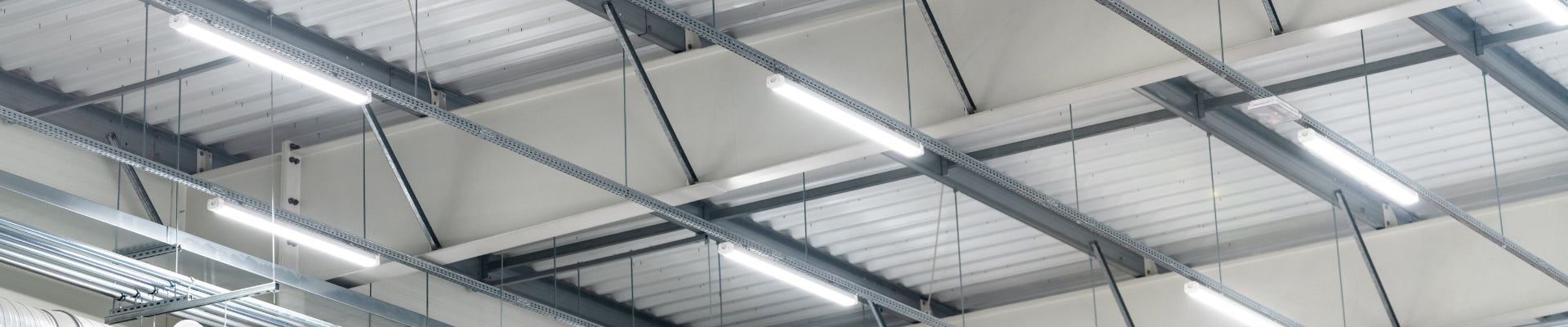
When architects and lighting designers look upward today, they are no longer limited to recessed down-lights or bulky fluorescent troffers. Low-profile LED strip lights have turned the ceiling plane into a continuous canvas where lumen output, color temperature, and beam angle can be specified with the same precision as paint color or veneer grain. Yet the difference between a luminous halo that lasts 50,000 h and a visible string of dots that fails in year two is seldom found on the spec sheet—it is locked inside the factory that builds the strip.
Seven Colors Lighting (Maxtop Tech) has been manufacturing that difference since 2009 from a 12,000 m² campus in Zhongshan, the Pearl River Delta corridor that feeds 70 % of the world’s LED exports. The location is more than a dot on the map; it is a logistics ecosystem where die-casting housings, SMT lines, and anodizing tanks sit within a 30 km radius, letting us run a true vertically integrated workflow. Incoming 0.2 mm copper PCBs are etched on an in-house LDI imaging line, populated by 24 Yamaha pick-and-place machines, and then fed directly into six reflow ovens profiled for 3 oz copper boards—critical for 24 V long-run ceiling applications where voltage drop can quietly rob 15 % of luminous flux. Every reel is then aged for 2 h at 75 °C and 85 % RH before an integrating-sphere test, a step that field data show eliminates 98 % of infant mortality failures that would otherwise show up after the drywall is painted.
The ceiling market also demands lengths that match room modules, not inventory modules. Our slitting and solder-jumper line can deliver 24 V strips in continuous 50 m reels with ≤ 3 % lumen drop end-to-end, or in 280 mm cut segments that align with 600 mm ceiling grids without dark nodes. For cove and coffer details, we extrude UV-stable silicone in 180° and 270° optics on the same floor where the SMT line operates, ensuring CCT consistency within a 2-step MacAdam ellipse—critical when the strip is reflected off gypsum and scrutinized from below. With a 250-person engineering group stationed between the factory and the Guangdong-Hong Kong-Macao Greater Bay Area lighting cluster, we turn custom CRI 95, tunable white, or DMX512 addressable samples in five working days, not five weeks.
Ceiling lighting is no longer an afterthought; it is the first surface a client judges when they walk into a lobby, showroom, or EV charging lounge. Starting with a supplier whose QC culture is built into the same concrete that supports the SMT floor is the fastest way to guarantee that the only thing occupants notice is the architecture—not the hardware hidden above it.
Technical Specifications
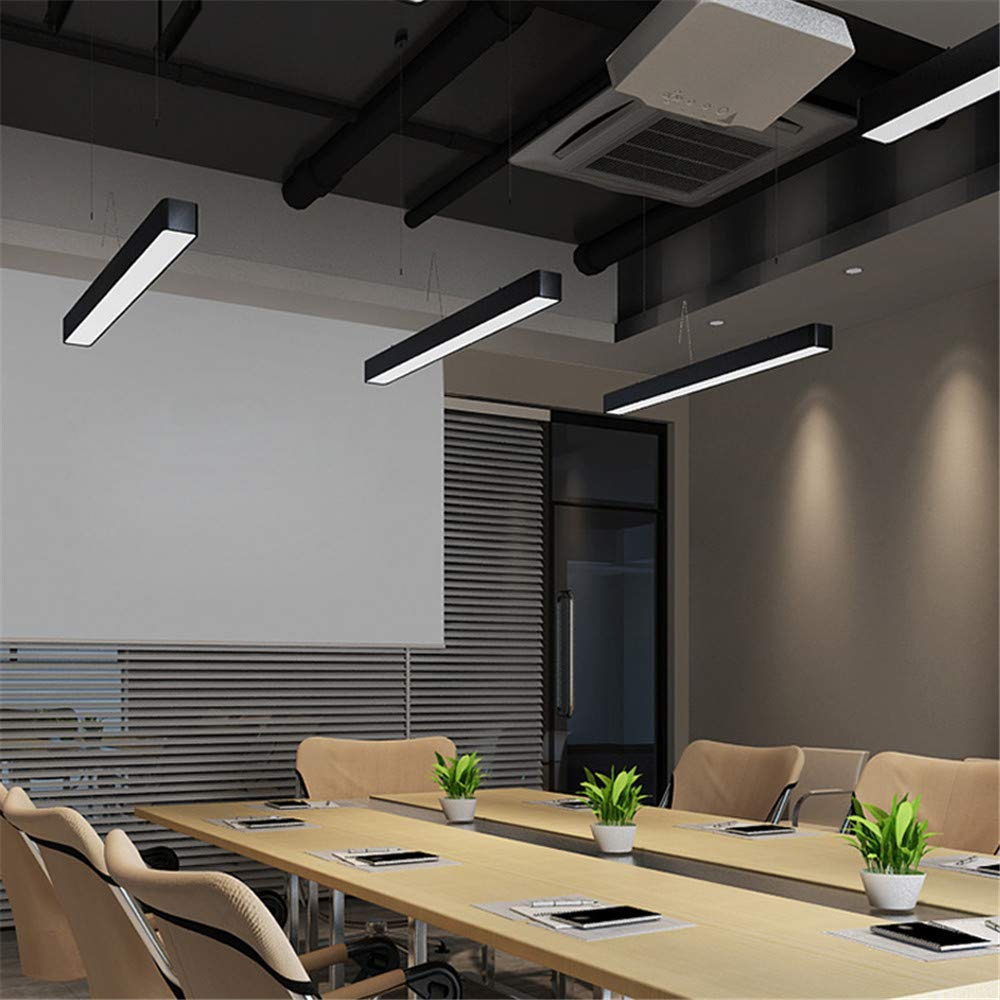
In commercial environments, ceiling lighting isn’t just functional—it’s foundational to ambiance, productivity, and brand perception. Traditional lighting solutions often fall short in delivering the precision and adaptability modern spaces demand. At Seven Colors Lighting, our commercial-grade LED strip lights are engineered to redefine these expectations, combining superior color accuracy, exceptional energy efficiency, and unparalleled customization—all accessible with minimal order commitments.
High Color Rendering Index (CRI) is critical in settings where color fidelity impacts user experience and business outcomes. Our LED strips consistently achieve CRI values exceeding 95, ensuring that skin tones, product displays, and architectural details appear natural and vibrant. This is especially vital in retail environments, where accurate color representation can directly influence purchasing decisions, and in healthcare or educational facilities, where visual clarity supports well-being and learning. Unlike lower-CRI alternatives that may cause colors to appear washed out or distorted, our precision-engineered phosphor blends deliver consistent, true-to-life illumination across the entire spectrum.
Beyond visual quality, energy efficiency is a non-negotiable factor in commercial projects. Our LED strips deliver up to 140 lumens per watt—significantly outperforming legacy fluorescent and halogen systems—while maintaining longevity of 50,000+ hours. This translates to substantial operational cost savings, reduced carbon footprint, and compliance with green building standards like LEED. The low heat output also minimizes strain on HVAC systems, further contributing to overall building efficiency. For facility managers, this means lower total cost of ownership without compromising on performance.
True versatility lies in customization. Our LED strips support a wide range of configurations—from tunable white (2700K to 6500K) to full RGBW options—alongside customizable beam angles, IP65/IP67 ratings for wet or dusty environments, and integrated dimming protocols like 0-10V or DALI. Crucially, we understand that not all projects require massive quantities. With minimum order quantities starting as low as five meters, designers and contractors can prototype, test, or implement small-scale installations without inventory burdens. This flexibility accelerates project timelines and reduces financial risk, making high-performance lighting accessible for everything from boutique retail spaces to bespoke architectural features.
At Seven Colors Lighting, we blend technical excellence with practical business needs. By prioritizing high CRI fidelity, energy-conscious design, and adaptable customization—paired with low-barrier entry points through small MOQs—we empower commercial clients to create spaces that are both visually compelling and operationally sustainable. Whether you’re renovating a flagship store or designing a new corporate headquarters, our team is ready to tailor solutions that meet your exact specifications. Contact us today to discuss how our LED strip lighting can elevate your next project.
Application Scenarios
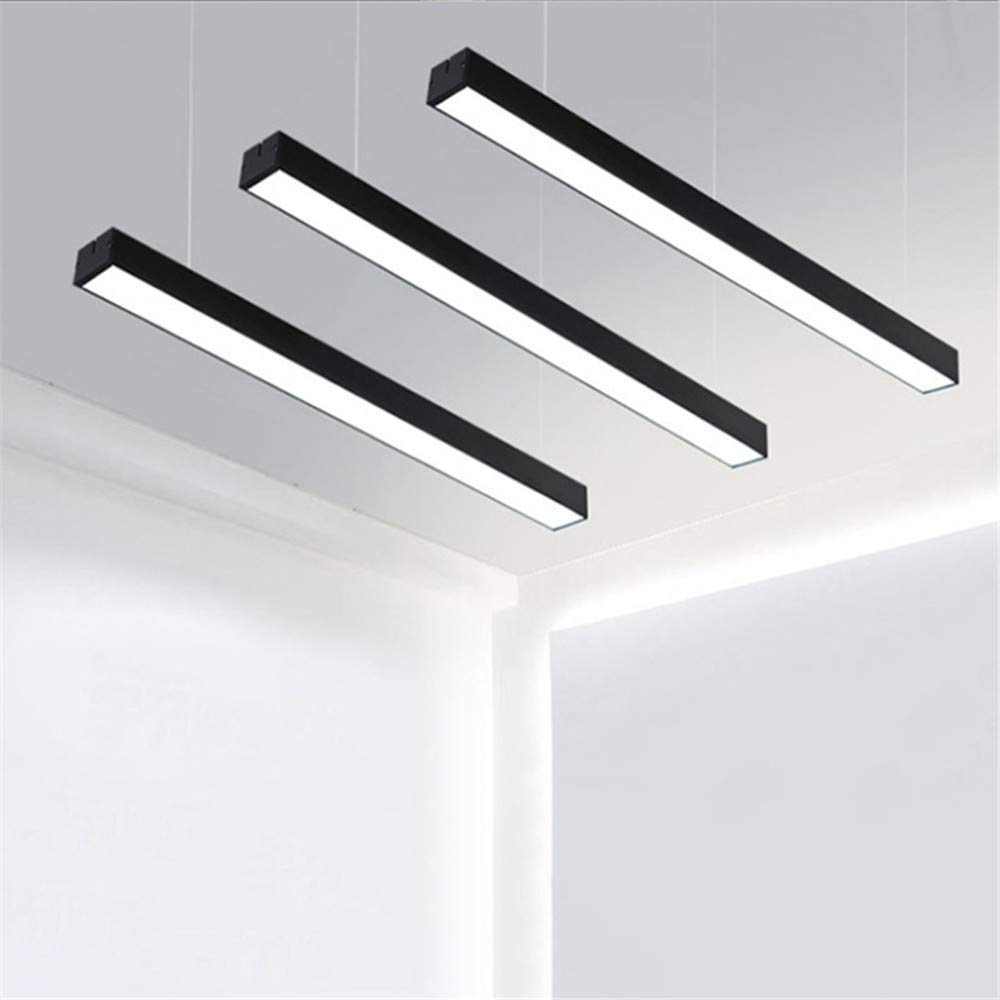
Ceiling-grade LED strip lighting has quietly moved from “accent option” to “primary light source” in most commercial portfolios. The reason is simple: a 24 V constant-current strip can now deliver 1,500 lm per metre while staying only 10 mm wide, so the ceiling plane can glow instead of being punctured by down-lights. Below is a field-tested map of where the product is being installed today, what specification details matter on each site, and the watch-outs that keep maintenance teams happy for the full 50,000 h L70 life.
Hotels – guest-room perimeter cove
The brief: produce 150 lx at bed height without visible pixels, and allow 1 % dimming for night-mode.
Install location: 200 mm indirect cove running the full length of the headboard wall, continuing into the corridor bulkhead.
Specification: 24 V, 180 LEDs/m, 90 CRI, 2-step MacAdam 2700 K, paired with a DALI driver that supports DT8 tunable white so the guest can shift from 2700 K to 4000 K.
Watch-out: use a silicone sleeve with UV-blockers; curtains are often left open in tropical climates and the 405 nm spike can yellow low-cost PU diffusers in under a year.
Hotels – ballroom coffer
The brief: create a 3 m floating ceiling plane that can switch from 1000 lx conference mode to 50 lx dinner mode in one second.
Install location: aluminium 15 mm recess profile mounted to the top flange of the coffer steel, aiming upward to bounce light off the matte-white plaster.
Specification: 24 V, 14.4 W/m, 95 CRI, 3000 K, with on-board IC for pixel mapping so the AV team can chase colours around the coffers during product launches.
Watch-out: provide a second 230 V circuit for the driver racks; hotel ballrooms often share dimming channels with motorised partitions, and neutral current can rise to 3 A when all RGB channels are at full.
Offices – open-cell ceiling uplight
The brief: deliver 500 lx on the work plane while keeping UGR <19 and eliminating glare on vertical screens.
Install location: 600 mm modules clipped to the T-bar of the open-cell ceiling, aimed upward to create a 1 m luminous “cloud” that hides the bare concrete deck.
Specification: 24 V, 10 W/m, 80 CRI, 4000 K, bin-coded to 3 SDCM, with a frosted 60° polycarbonate diffuser to knock the peak intensity down to 1,200 cd/m².
Watch-out: confirm the plenum temperature; in warm climates the air above an open-cell ceiling can hit 45 °C. De-rate the strip to 0.7 or select an 85 °C rated LED to avoid colour shift.
Corporate boardroom – centre light trough
The brief: a 12 m oval table needs uniform facial illumination for 4K video conferencing, but the architect will not allow pendant fixtures.
Install location: 100 mm continuous trough machined into the underside of the 40 mm acoustic plasterboard ring; the strip faces straight down through an opal micro-prism diffuser.
Specification: 24 V, 28.8 W/m, 95 CRI, 3500 K, TLCI >90, flicker-free at 2 kHz shutter speed.
Watch-out: use a constant-voltage driver with remote sense terminals; voltage drop along 12 m of 24 V strip can create 8 % lumen drop from feed to tail, which the camera reads as a gradient.
Retail flagships – halo ceiling perimeter
The brief: make the ceiling appear to float 300 mm above the wall to draw shoppers deeper into the store.
Install location: 45° aluminium corner profile fixed to the top of the GWB bulkhead, shooting across the ceiling plane.
Specification: RGBW 24 V, 14.4 W/m, with 1800 K warm white channel so the halo can switch from cool “day” to warm “evening” retail scenes.
Watch-out: match the plasterboard paint to Munsell N7; anything darker drops the reflected luminance below 30 cd/m² and the halo disappears under 1000 lx track lighting.
Shopping malls – transit corridors
The brief: 200 m of continuous ceiling coves that can be relamped without scaffolding.
Install location: 3 m high continuous shadow-gap; the strip is mounted on a magnetic rail so a telescopic pole can pull a 1 m section down from floor level.
Specification: 48 V, 20 W/m, 80 CRI, 4000 K, IP44 silicone coating to survive steam cleaning of the terrazzo floor below.
Watch-out: use a 48 V system to keep current under 2.5 A per 50 m run; 24 V would need 4 mm² conductors that do not fit inside the 15 mm shadow-gap.
Hospitals – MRI suite ceiling perimeter
The brief: create a calming 300 lx ambient field inside a radio-frequency shield where ferrous metals are banned.
Install location: non-ferrous aluminium profile bonded to the non-magnetic GFRP ceiling frame, powered from DC drivers located outside the Faraday cage.
Specification: 24 V, 8 W/m, 90 CRI, 3500 K, silicone-free jacket (to avoid out-gassing in the magnet room).
Watch-out: run fibre-optic control lines; copper PWM wires can re-radiate RF noise that degrades image quality.
Wellness & pools – spa ceiling raft
The brief: continuous 100 lx indirect light that can shift from 2700 K “sunset” to 6500 K “zenith” while resisting chlorine vapour.
Install location: underside of 40 mm thick Corian rafts floating 200 mm below the main ceiling.
Specification: 24 V, IP67, 95 CRI, tunable white from 1800 K to 6500 K, with PU potting rated for 10,000 ppm chlorine exposure.
Watch-out: specify drivers with conformal-coated PCBs and place them in a separate plant room; even IP67 strips will fail if the driver’s electrolytic capacitors breathe chlorinated air.
Indoor swimming pools – stainless gutter detail
The brief: highlight the water edge without creating glare for lifeguards.
Install location: inside the stainless-steel balance tank lip, facing the water, concealed by a 10 mm opal lip.
Specification: 24 V, IP68, 6 W/m, 80 CRI, 4000 K, salt-water rated to 5 % salinity for thalasso pools.
Watch-out: bond the aluminium profile to the pool equipotential earth; stray current corrosion can eat 1 mm of stainless in six months if the strip’s anodised coating is breached.
Museums – light-sensitive exhibits
The brief: provide 50 lx on artefacts while keeping UV <10 µW/lm and eliminating flicker for high-frame-rate conservation photography.
Install location: ceiling cove 1 m from the wall, grazing the textile display case top.
Specification: 24 V, 6 W/m, 97 CRI, 3000 K, with a 420 nm cut-filter built into the diffuser.
Watch-out: use a driver with 16-bit dimming; 8-bit creates 0.4 % steps that are visible when museum photographers bracket at 1/10 stop intervals.
Car showrooms – brand colour chase
The brief: synchronise ceiling RGB pixels with the launch video on the media wall.
Install location: 30 mm recessed channel in the 6 m high black stretched-fabric ceiling, forming a 40 m loop.
Specification: 5 V addressable, 60 LEDs/m, 12 W/m, with data amplifiers every 5 m to prevent signal degradation.
Watch-out: power injection every 2.5 m; voltage drop on 5 V strips can shift red intensity 15 % over 10 m, turning brand “Ferrari Rosso” into “Tomato”.
Data centres – aisle containment glow
The brief: give technicians 200 lx maintenance light that re-uses the same 48 V DC bus used by the servers.
Install location: top flange of the cold-aisle containment beam, facing downward at 30°.
Specification: 48 V, 10 W/m, 80 CRI, 5000 K, with a T-rating of T45°C so it can touch plastic curtain strips without derating.
Watch-out: select strips that accept ±20 % voltage tolerance; server DC buses can swing from 46 V to 54 V during battery equalisation.
Key take-away
In every vertical the strip is no longer decoration; it is part of the architectural infrastructure. Specify the profile, LED pitch, voltage class, and driver topology for the exact ceiling geometry, not for the catalogue photo. If you treat the strip like a miniature luminaire—complete with spacing-to-height ratio, surface reflectance, and ambient temperature de-rating—you will hit the lux target first time and avoid the costly “second lift” to replace early failures.
Why Choose Seven Colors Lighting
In today’s competitive lighting market, businesses face mounting pressure to deliver high-quality products on time and within budget. Fragmented supply chains, inconsistent quality, and unpredictable lead times can derail projects and erode profitability. At Seven Colors Lighting, we’ve redefined how lighting solutions are sourced and delivered. By leveraging our unique network of over 1,000 coordinated factories, we provide a seamless, end-to-end solution that eliminates traditional procurement hurdles. This strategic partnership model ensures not only cost efficiency but also unparalleled reliability for your projects.
Our network of 1,000+ factories isn’t just about scale—it’s about intelligent coordination. Unlike suppliers who juggle multiple independent vendors, we manage every aspect of production under a unified system. This means no more dealing with conflicting schedules, varying quality standards, or communication gaps between suppliers. Each factory in our network adheres to strict quality protocols and is optimized for specific product types, allowing us to allocate workloads dynamically. The result? Consistent quality across all orders, the ability to handle large-scale projects without bottlenecks, and the flexibility to scale production up or down based on your needs.
With no intermediaries between our factories and your project, you benefit from genuine factory-direct pricing. This direct relationship eliminates markups from third-party distributors, passing significant savings directly to you. But cost efficiency isn’t our only focus—by controlling the entire supply chain, we maintain transparency in pricing and ensure that every component meets our rigorous standards. This approach allows you to achieve better margins without compromising on quality or reliability.
Speed matters in project timelines, and our integrated network enables rapid delivery without sacrificing quality. Through strategically located production hubs and optimized logistics, we minimize lead times from order to delivery. Whether you need a standard order or a rush project, our coordinated system ensures that production and shipping are streamlined. Clients consistently report delivery times that are significantly faster than industry averages, giving you the confidence to meet tight deadlines and keep your projects on schedule.
Partnering with Seven Colors Lighting means more than just sourcing products—it’s about building a reliable, cost-effective, and efficient supply chain that supports your business growth. With our coordinated factory network, direct pricing model, and commitment to swift delivery, you gain a true partner dedicated to your success. Let us handle the complexities of procurement so you can focus on delivering exceptional lighting solutions to your customers.
Contact Us
Ready to start your project? Contact Seven Colors Lighting (Maxtop Tech) today.
- Email: info@maxtoptek.com
- Tel/Fax: +86-0760-85320448
- Address: 5th Floor, NO.6 Fourth Street, Dongpai Xi Road, Xiaolan Town, Zhongshan City, China
💡 LED Power Calculator
Estimate the power supply needed for your project.
