 Skype Me
Uncategorized
Pool Lamp Led Manufacturer Guide
Dec
Catalog
Industry Insight: Pool Lamp Led
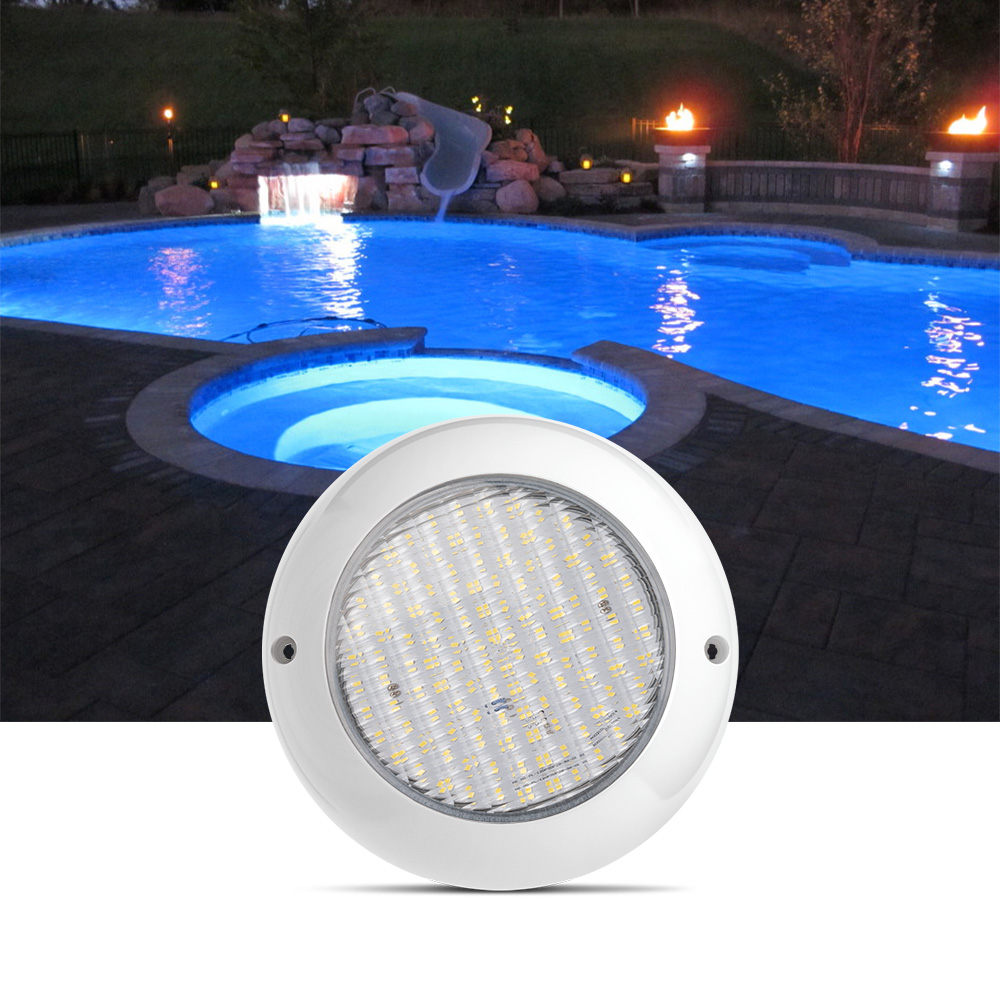
When the sun sets over a resort pool in Dubai or a rooftop infinity pool in Singapore, the water doesn’t simply disappear into darkness—it becomes a canvas for light. The difference between a flat, lifeless surface and a glowing, three-dimensional aquascape is often a few watts of well-chosen LED photons. Yet behind every seamless color shift or perfectly uniform white wall of light there is a supply chain that begins long before the first fixture is dropped into a niche. That chain starts in Zhongshan, Guangdong Province, where Seven Colors Lighting (Maxtop Tech) has been designing, tooling, and testing pool lamp LED solutions since 2009.
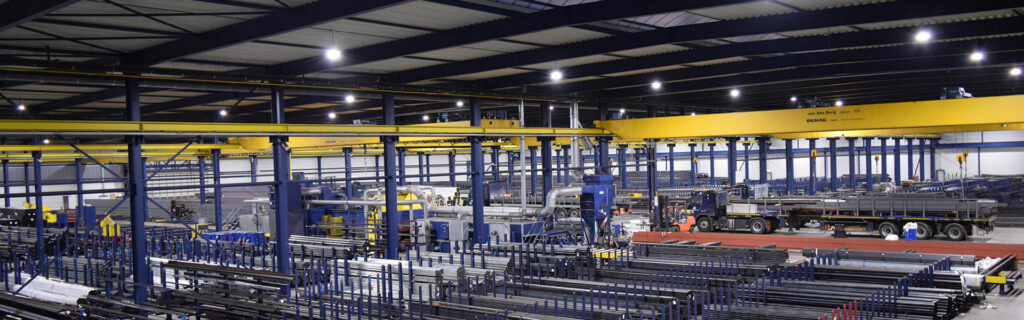
Zhongshan is not just another industrial city on the Pearl River Delta; it is the global epicenter of lighting component fabrication. Within a 30-kilometer radius our engineers can source borosilicate glass, marine-grade 316L stainless steel, potting epoxies rated for −40 °C, and every wavelength of LED die from 2700 K to 900 K. Proximity alone, however, does not guarantee performance. Our 18,000 m² campus houses a CNAS-accredited photometric lab, a 50-meter underwater pressure tunnel, and an automated SMT line that places up to 120,000 components per hour. Every pool lamp LED that leaves the loading dock has survived 1,000 hours of salt-spray, thermal shock between −20 °C and 85 °C, and a 10,000-volt surge test—conditions few end-users ever see, but ones that determine whether a fixture will still be glowing on the tenth anniversary of a hotel opening.
Because we tool our own housings, mold our own lenses, and write our own firmware, specifiers can move beyond catalog limitations. Need a 45 ° narrow beam in 480 nm turquoise for a competition lane? A 24 VDC version that synchronizes with DMX-controlled deck jets? A flush-mounted niche only 25 mm deep for a vanishing-edge detail? Those requests arrive as engineering tickets, not sales obstacles. From initial sketch to IP68 certification averages 28 calendar days, a timeline that compresses months out of the typical custom-lighting workflow.
The result is that landscape architects, pool builders, and lighting consultants no longer have to choose between commodity fixtures that fade in two seasons and boutique products that blow the budget. By integrating vertical manufacturing with design-for-maintainability—every LED board is field-replaceable without draining the pool—we deliver the color quality and controllability expected of high-end hospitality projects at the volume and price structure demanded by large-scale residential developments.
In the posts that follow we will deconstruct the technical DNA of modern pool lamp LED systems: how phosphor chemistry influences color stability, why thermal paths matter more than wattage, which control protocols actually survive underwater, and how to read an LM-80 report without drowning in footnotes. Whether you are writing a performance specification for a 2,000-room beachfront resort or selecting a single accent light for a private villa, the goal is the same: light that performs as beautifully on the 3,650th night as it did on the first, backed by a factory that can still deliver identical replacements a decade later.
Technical Specifications
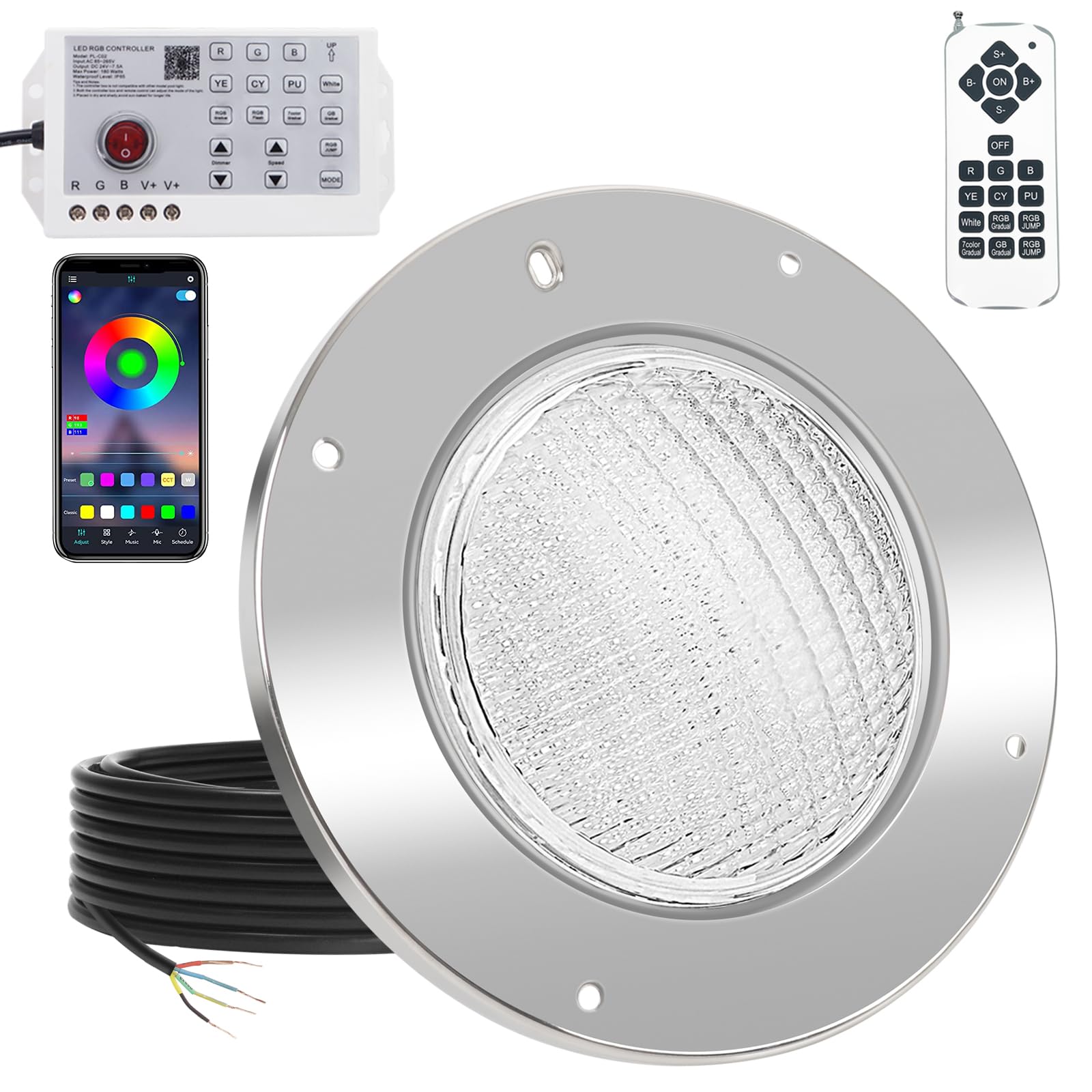
In the competitive world of pool construction and renovation, the reliability of underwater lighting is non-negotiable. A single failed pool light can disrupt operations, compromise safety, and incur costly repairs. At Seven Colors Lighting, part of Maxtop Tech, we engineer LED pool lights designed to endure the harshest aquatic environments while delivering exceptional performance. Our focus on robust technical specifications ensures longevity and peace of mind for our B2B partners.
Our LED pool lights achieve the highest IP68 waterproof rating, meaning they are completely sealed against dust ingress and can operate continuously under water at depths exceeding 1 meter. This isn’t just a theoretical rating—we subject each unit to rigorous testing protocols including 24-hour submersion at 2 meters depth and pressure cycling to simulate real-world conditions. The result is zero moisture ingress even in high-pressure scenarios like pool jets or deep-end installations, eliminating common failure points like condensation or electrical shorts. This level of protection is critical for commercial installations where safety compliance and uninterrupted operation are paramount.
The housing is crafted from marine-grade 316 stainless steel, which contains molybdenum for superior resistance to chloride-induced corrosion. Unlike standard 304 stainless steel, which can pit or rust in saltwater pools, our 316 alloy maintains structural integrity over decades of exposure to chlorine, bromine, and salt. This material choice is critical for coastal installations or commercial pools where chemical exposure is constant, ensuring the fixture remains corrosion-free and visually pristine. Every component is precision-machined to meet stringent tolerances, guaranteeing a perfect seal and long-term durability even in aggressive environments.
Internally, the light assembly is fully encapsulated with high-grade epoxy resin. This resin not only seals every component against water penetration but also acts as a thermal conductor, efficiently dissipating heat away from the LED chips. By preventing thermal stress and moisture-related degradation, this resin-filled design extends the operational lifespan of the LEDs by up to 50% compared to non-resin alternatives, reducing maintenance costs and downtime for our clients. The resin also provides mechanical stability, protecting sensitive electronics from vibrations and physical impacts during installation or pool maintenance.
We understand that project scales vary widely. That’s why we offer minimal MOQ requirements starting at just 10 units, making our high-performance solutions accessible to smaller contractors, boutique pool builders, or specialty projects. This flexibility allows partners to test new designs or fulfill small-scale orders without significant inventory investment, streamlining procurement for diverse business needs. Whether you’re outfitting a single luxury residential pool or managing a multi-unit development, our low MOQ structure supports agile project execution without compromising on quality.
Beyond standard offerings, we provide comprehensive customization options. Clients can specify color temperatures from warm 2700K to cool 6500K, adjustable beam angles for precise light distribution, or custom mounting configurations to fit unique pool architectures. Our engineering team collaborates closely with partners to develop tailored solutions—whether it’s for a luxury residential pool or a large-scale commercial aquatic facility—ensuring every detail meets exact specifications. We also accommodate requests for integrated smart controls, dimming capabilities, or specialized finishes to align with brand standards or design aesthetics.
At Maxtop Tech, we believe that exceptional underwater lighting is built on uncompromising engineering. By integrating IP68 waterproofing, 316 stainless steel construction, and resin-filled thermal management with flexible ordering and customization, we deliver products that reduce total cost of ownership and enhance client satisfaction. Contact our engineering team today to discuss how our solutions can elevate your next pool project.
Application Scenarios
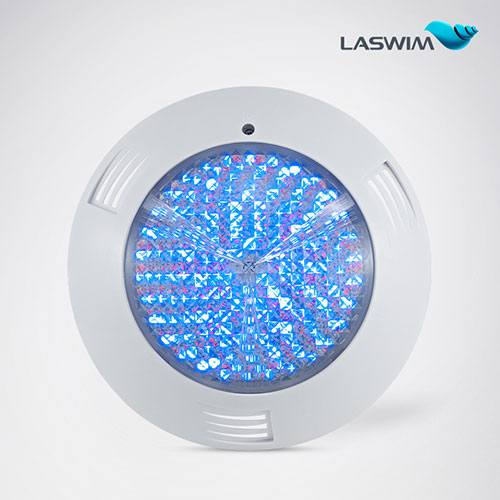
LED pool lamps have quietly become the Swiss-army knife of architectural lighting. Once relegated to the niche task of “making water blue,” they now deliver IP68-rated photons to any space that needs long-life, color-tunable, low-voltage accent light. Below is a field-tested map of where specifiers are parking them, why the choice makes technical sense, and what to watch before you commit a BOM.
- Hospitality Wet Zones: Beyond the Infinity Edge
Rooftop infinity pools at 5-star resorts are the obvious poster child, but the same 12 VAC or 24 VDC LED fixtures are being tucked into:
• Perimeter overflow channels – 45° wall-mount brackets aim light across the thin film of water, turning the catch basin into a second visual plane.
• Baja shelves and swim-up bar stools – narrow-beam 6 W RGBW units cast a halo around submerged seating so bartenders see glassware, not glare.
• Reflection ponds under lobby bridges – 2700 K 3 W micro fixtures create a “mirror” at night without raising water temperature or attracting insects.
Specify marine-grade 316 SS housings and synchronize the DMX address with façade uplights so the color palette rolls from the tower crown to the water surface in one cue.
-
Commercial Spas & Wellness Centers: Chromotherapy Meets Code
Healthcare-adjacent projects demand <12 V AC ripple and <0.5 % flicker. Use a remote low-voltage driver rack outside treatment rooms, then run Class 2 wiring to IP68 LED “light stones” embedded in hydrotherapy benches. The same drivers can cross-fade 1800 K amber (melatonin-friendly) to 6500 K cyan (alertness) on a 30-minute circadian script while staying below the 3 W m⁻² irradiance limit in IEC-62471 Exempt. -
Corporate Campuses: The Moat as Brand Asset
Tech headquarters are wrapping retention ponds with 24 V linear LED bars aimed inward. The water hides the luminaire from direct view, so employees see only the reflection—an inexpensive way to turn storm-water infrastructure into Instagram bait. Use tunable-white fixtures (2700–6500 K) tied to the building’s IoT backbone; color temperature tracks the stock price or carbon-offset meter in real time. -
Retail & Entertainment: Water as a Projection Screen
Malls are replacing traditional fountains with 5 mm thick laminar water sheets. Behind the sheet, a matrix of high-intensity 24 V RGB LEDs (1800 lm per 100 mm node) turns the water into a low-resolution media façade. Because the LEDs are wet-location rated, maintenance staff can swap a pixel in under five minutes without draining the feature. Match the pixel pitch to the viewing distance: 150 mm for 30 m throw, 100 mm for 15 m. -
High-End Residential: The Vanishing Edge Mirror
Luxury backyards are specifying 10 mm shallow-profile LED plates that glue to the pool wall with epoxy. When the water is still, the fixture disappears; when the pump runs, caustics dance on the soffit. Use 2200 K for “fire and water” themes or 4000 K for moonlight simulation. Pair with a phosphor-converted aqua lens (peak 490 nm) to make white marble aggregate fluoresce without raising CCT above 3000 K. -
Architectural Water Features: Fountains, Waterwalls, Rain Curtains
• Waterwalls – side-graze with 1 W linear LEDs every 300 mm; the grazing angle (20–30°) hides the source and emphasizes texture.
• Rain curtains – embed 0.5 W micro spots in the top trough; droplets become individual points of light. Specify 24 V to keep touch voltage under 30 V SELV even if a conductor is nicked.
• Interactive splash pads – use addressable RGBW dots synchronized to pressure sensors; kids trigger color ripples that fade over five seconds. Specify IK08 polycarbonate lenses to survive the inevitable kick from a sneaker. -
Underwater Signage & Wayfinding
Airports and aquariums are routing 24 V LED strips inside 40 mm clear acrylic tubes to create submerged directional arrows. The tubes are ballasted so they rest on the tank floor; power is fed through wet-mateable connectors from a hidden trough outside the viewing window. Luminous flux is kept at 120 lm per arrow to stay below the threshold that triggers algae bloom (roughly 1 µmol m⁻² s⁻¹ PAR). -
Off-Label Dry Locations: When Wet-Rated Beats Dry-Rated
Because IP68 LED fixtures are over-engineered for humidity and chloride attack, they are increasingly specified in:
• Car-wash tunnels – high-pressure soap spray and 60 °C runoff.
• Commercial kitchens – hose-down zones under prep tables.
• Salt-curing rooms – 95 % RH, airborne NaCl.
• Data-center drip pans – secondary containment under chilled-water pipes.
The premium over a standard IP65 fixture is often <15 %, but the warranty jumps from three to five years and includes chemical resistance charts.
Installation Checklist (applies to every scenario)
1. Voltage class: 12 VAC for retrofits using existing halogen transformers; 24 VDC for new builds to cut resistive losses.
2. Driver placement: minimum 3 m from water edge unless IP67; use stainless NEMA 4X enclosures with passive louvers to avoid condensation pumps.
3. Bonding & equipotential: tie all niches and housings to the pool-equipotential busbar per NEC 680.26(B), even on low-voltage circuits.
4. Thermal rollback: verify driver datasheet; many units derate linearly above 40 °C ambient.
5. Material compatibility: 316 SS for saltwater; AB2 bronze for historic fountains; PVC niche for vinyl-liner pools.
6. Control protocol: DMX for color-changing, 0–10 V for white tune, Casambi for residential apps that want phone control without a panel.
7. Service loop: leave 1 m of cable coiled in the niche so the fixture can be lifted onto deck for relamping without draining.
8. Photobiological safety: document IEC-62471 “Exempt” or “Risk Group 1” for any fixture within 2 m of human contact.
Takeaway
If the space ever sees water, detergent, chloride, pressure-washers, or 100 % humidity, an LED pool lamp is no longer a specialty SKU—it is the default robust node in your lighting network. Start with the wet-location rating, then work backward to beam angle, CCT, and control protocol. The result is lower maintenance, longer warranty, and a luminous signature that no dry-rated fixture can safely match.
Why Choose Seven Colors Lighting
In today’s competitive lighting market, procurement challenges can derail projects before they begin. Delays, inflated costs, and inconsistent quality are common pain points for businesses relying on fragmented supply chains. As a Senior Lighting Engineer at Seven Colors Lighting, I’ve seen firsthand how these issues impact project timelines and client satisfaction. That’s why our integrated approach—built on a global network of over 1,000 coordinated factories, factory-direct pricing, and streamlined delivery systems—is designed to eliminate these hurdles and deliver reliable, cost-effective solutions for your most demanding projects.
Our global manufacturing ecosystem of more than 1,000 coordinated facilities isn’t just about scale—it’s about precision and adaptability. Each factory operates under standardized quality control protocols aligned with international standards like ISO 9001 and IEC 60598, ensuring consistent performance across all products. Whether you’re sourcing LED downlights for a retail chain, high-CRI architectural fixtures for a hospitality project, or rugged industrial floodlights for a remote site, our network can scale production seamlessly. This structure allows us to handle both small-batch custom orders and large-scale infrastructure contracts without compromising on specifications or timelines. Crucially, it minimizes single-point failures; if one facility faces unexpected disruptions, others within the network can adjust output to keep your project on track.
Factory-direct pricing is another cornerstone of our value proposition. By eliminating third-party distributors and intermediaries, we remove unnecessary markups and hidden fees from the supply chain. This means you receive transparent, competitive pricing directly from the source—no layered costs or ambiguous fee structures. For procurement teams managing tight budgets, this translates to predictable financial planning. You’ll know exactly what you’re paying for each component, from raw materials to finished goods, with no surprises during invoicing. This approach also enables us to offer flexible payment terms and volume-based discounts, ensuring your investment aligns with your project’s financial goals while maintaining uncompromised quality.
Speed is equally critical in lighting projects, where delays often cascade into costly setbacks. Our logistics infrastructure is engineered for efficiency, with strategically positioned regional warehouses and optimized shipping routes that reduce lead times by up to 40% compared to industry averages. Whether you need a rush order for a last-minute site adjustment or a scheduled delivery for a phased construction rollout, our system prioritizes timeliness without sacrificing safety or compliance. Real-time tracking and dedicated account managers ensure you’re always informed about shipment status, allowing your team to focus on execution rather than chasing updates. For projects with tight deadlines—like retail rollouts before holiday seasons or infrastructure upgrades during seasonal windows—this reliability makes the difference between meeting milestones and facing penalties.
Partnering with Seven Colors Lighting means more than accessing products; it’s about integrating a supply chain partner that anticipates your needs. From the initial design phase to final installation, our network ensures your lighting solutions are delivered on time, within budget, and to the highest technical standards. Let us handle the complexities of global manufacturing and logistics so you can concentrate on delivering exceptional results for your clients. Reach out to discuss how our integrated approach can support your next project.
Contact Us
Ready to start your project? Contact Seven Colors Lighting (Maxtop Tech) today.
- Email: info@maxtoptek.com
- Tel/Fax: +86-0760-85320448
- Address: 5th Floor, NO.6 Fourth Street, Dongpai Xi Road, Xiaolan Town, Zhongshan City, China
💡 LED Power Calculator
Estimate the power supply needed for your project.
