 Skype Me
Uncategorized
Recessed Led Down Light Manufacturer Guide
Dec
Catalog
Industry Insight: Recessed Led Down Light
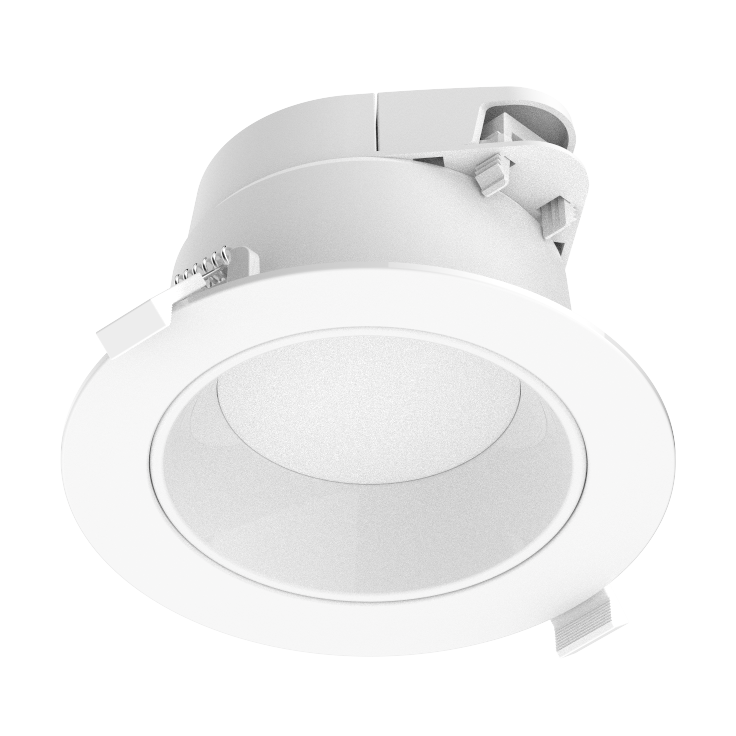
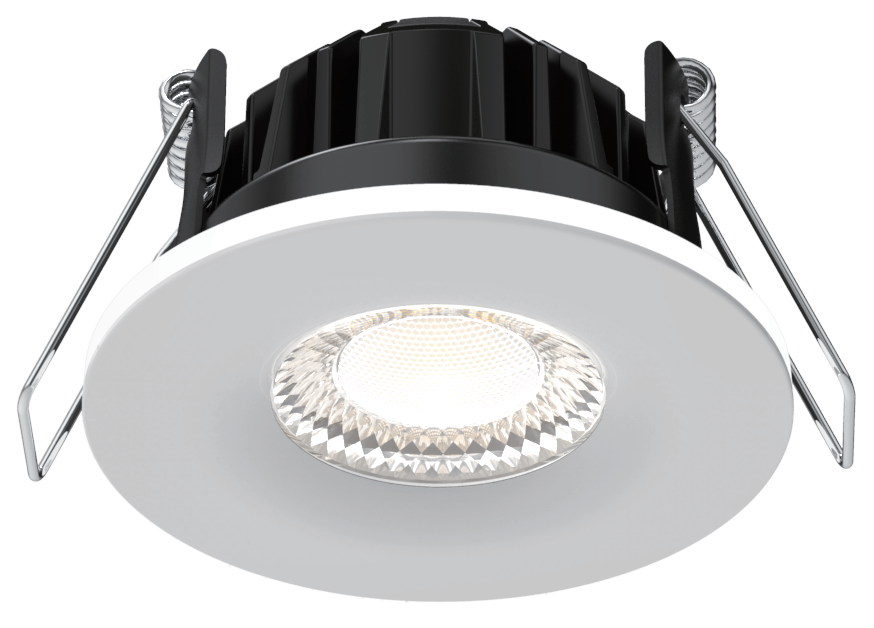
Recessed LED downlights have become the default choice for architects and lighting distributors who need clean ceiling planes, long service life, and watt-for-watt efficacy that legacy luminaires simply cannot match. Yet the market is crowded with look-alike modules that promise the same 50 000 h lifetime and 100 lm/W on the data sheet, only to deliver color shift, driver noise, and thermal sag once they are buried in a 100 mm ceiling plenum. The difference between a specification that still looks professional five years after hand-over and one that is replaced wholesale at the first maintenance cycle is almost always decided at the point of manufacture—before the fixture even reaches the job site.
Seven Colors Lighting (Maxco Tech) has been making that distinction in Zhongshan, Guangdong since 2009. Our 18 000 m² vertically integrated plant sits inside the world’s densest LED component corridor, giving us same-day access to Cree, Citizen, and Lumileds die banks, aluminum extrusion mills, and SMT lines that can place 150 000 components per hour. Every recessed downlight begins life on our own high-pressure die-casting floor where 160- and 300-ton presses turn 6063 aluminum into one-piece heat sinks with a minimum 2.5 mm wall thickness—enough thermal mass to keep junction temperatures below 85 °C even when the ceiling insulation is accidentally piled on top of the fixture. From there the housings move to a five-stage CNC cell that holds ±0.05 mm tolerance on the trim ring and reflector interface, eliminating the “micro-gap” that causes halos on narrow-beam models. Optics are vacuum-metallised in a Class 1000 clean room, then QC’d on a Goniospectroradiometer that logs luminous intensity in 1° increments; any batch that drifts more than 2 MacAdam ellipses from the black-body locus is rejected outright.
While competitors outsource drivers to the lowest bidder, we wind our own magnetics on a fully automated toroid line and burn-in every unit for 4 h at 105 % rated voltage in an ambient 45 °C chamber—conditions that expose early component failures before they can leave the building. The result is a family of recessed LED downlights that ships with a standard 5-year full-performance warranty, <3 % flicker at 100 Hz, and an L90/B10 lumen maintenance figure that is validated by TÜV SÜD rather than extrapolated from a 6 000 h TM-21 spreadsheet. Whether you are lighting a 200-store retail roll-out or a specification-grade hotel where 24 h operation is the norm, the fixture you bury in the ceiling should be the last thing you worry about. That peace of mind is what a decade and a half of vertical integration in Zhongshan has allowed us to engineer into every recessed module we build.
Technical Specifications
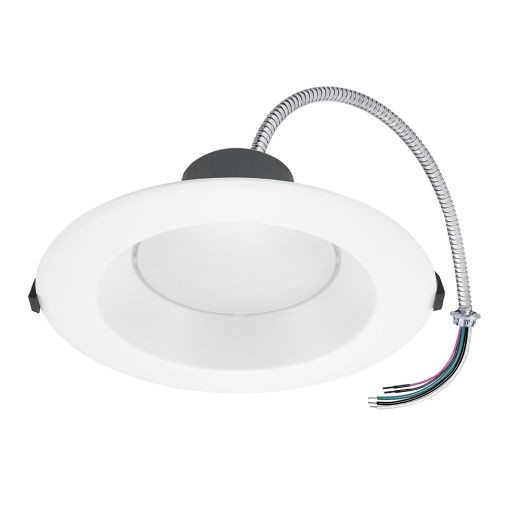
Precision in Every Beam: High-CRI Recessed LED Down Lights for Modern Commercial Applications
Commercial lighting has evolved beyond basic illumination to become a critical element in shaping environments that enhance productivity, safety, and aesthetic appeal. In spaces ranging from high-end retail stores and art galleries to healthcare facilities and corporate offices, the quality of light directly impacts user experience and operational efficiency. At Seven Colors Lighting, our recessed LED down lights are engineered to address these demands through a trifecta of technical excellence: exceptional Color Rendering Index (CRI), industry-leading energy efficiency, and adaptable customization—delivered with unprecedented flexibility for businesses of all sizes.
High Color Rendering Index (CRI) is no longer a luxury but a necessity in commercial settings. CRI measures how accurately a light source reveals the true colors of objects compared to natural daylight, with a scale from 0 to 100. Traditional lighting often falls short, with CRI values between 70 and 85, leading to dull or distorted color perception. Our recessed LED down lights consistently achieve CRI 90+ and can reach up to CRI 95+, thanks to advanced multi-phosphor coating technology and precise spectral engineering. This level of accuracy ensures that product displays in retail environments appear vibrant and authentic, medical diagnostics in healthcare settings remain reliable, and gallery installations preserve the integrity of artistic details. For architects and designers, this means creating spaces where visual fidelity directly translates to enhanced brand perception and customer satisfaction.
Energy efficiency remains a cornerstone of sustainable commercial design, and our down lights deliver significant operational savings without compromising performance. Each fixture is optimized for maximum lumens per watt, typically exceeding 100 lm/W—far surpassing older technologies like halogen or fluorescent. For instance, a single 12W LED down light can replace a 60W halogen equivalent while delivering superior brightness and uniformity. This efficiency translates to up to 80% lower energy consumption over the fixture’s lifespan, reducing electricity costs and carbon footprints. Combined with a rated life of 50,000+ hours and robust thermal management systems that prevent lumen depreciation, these lights minimize maintenance needs and long-term replacement expenses. Certifications such as Energy Star and DLC Premium further validate their compliance with rigorous efficiency standards, making them ideal for projects targeting green building certifications like LEED or BREEAM.
Customization is where our solutions truly stand apart. Commercial projects rarely fit a one-size-fits-all mold, and our down lights are designed to adapt. Beam angles can be tailored from narrow 15° spotlights for accent lighting in museum exhibits to wide 120° distributions for open-plan offices, ensuring precise light control. Color temperatures span from warm 2700K for cozy hospitality spaces to cool 6500K for high-focus industrial environments, with seamless dimming compatibility across 0-10V, DALI, or proprietary smart protocols. Finishes include matte black, brushed nickel, white, and custom powder-coated options to match any interior palette, while housing depths accommodate both new construction and retrofit installations. Whether you need a specific mounting style for low-ceiling retail spaces or a fire-rated housing for commercial kitchens, our engineering team works closely with clients to refine every detail.
Recognizing that flexibility is key to modern procurement, we offer small minimum order quantities (MOQ) starting at just 50 units. This approach eliminates the financial risk and inventory burden often associated with bulk orders, allowing architects to prototype designs, contractors to execute smaller-scale projects, and businesses to test new lighting concepts without committing to large inventories. Small MOQs also accelerate decision-making—enabling rapid adjustments based on real-world feedback before scaling production. For clients requiring unique specifications, our modular platform supports everything from bespoke color temperatures to integrated sensors, all while maintaining consistent quality and lead times.
At Seven Colors Lighting, we understand that commercial lighting must balance technical precision with practical business needs. Our recessed LED down lights are more than fixtures; they’re engineered solutions that elevate visual experiences, reduce operational costs, and adapt to the unique demands of every project. By prioritizing high CRI, energy efficiency, and customizable design—paired with the agility of small MOQs—we empower architects, designers, and facility managers to create spaces that perform brilliantly and stand the test of time.
Contact our engineering team today to discuss your specific requirements and discover how our tailored lighting solutions can transform your next commercial project.
Application Scenarios
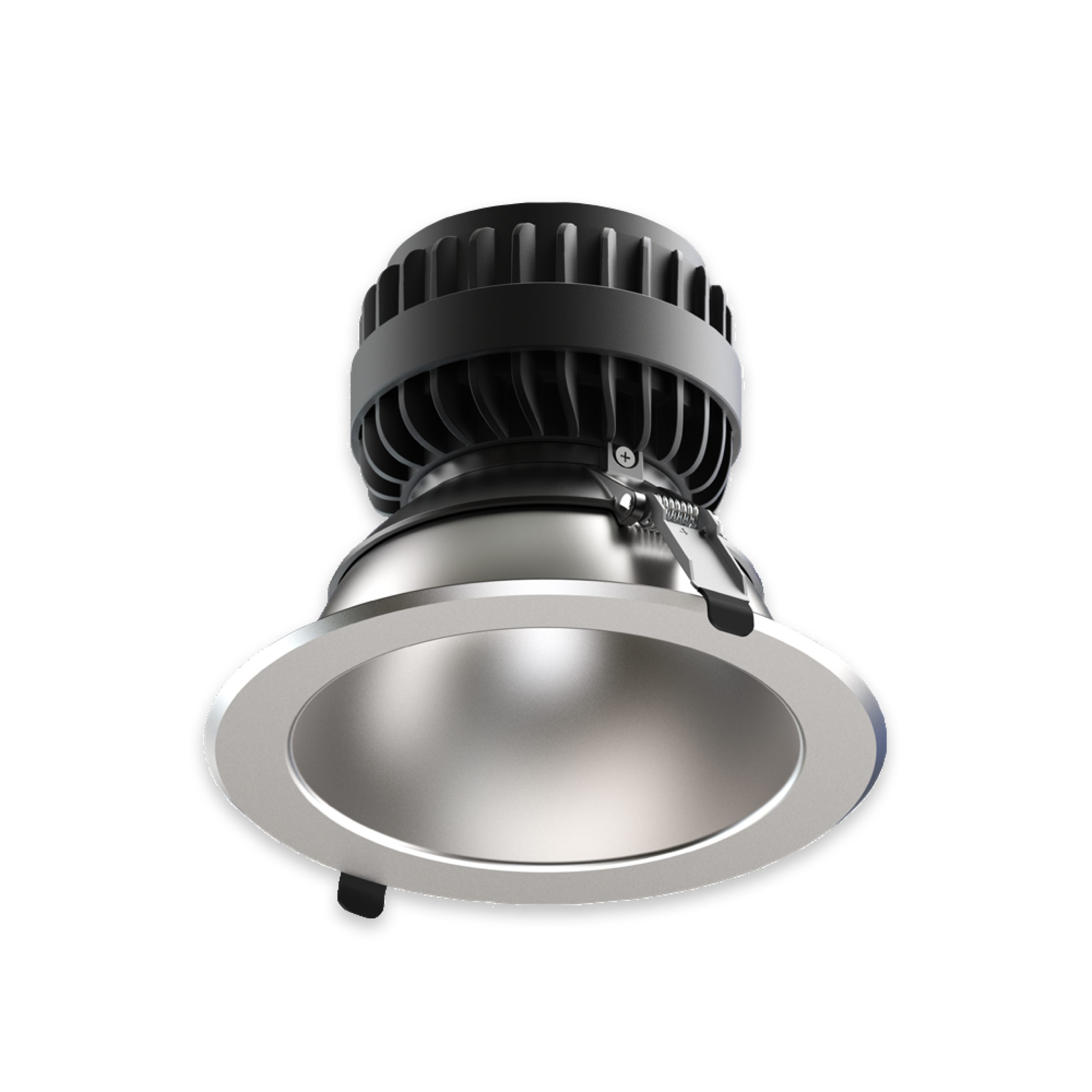
Recessed LED down-lights have quietly become the default module for architects who need a ceiling that reads as a single, uninterrupted plane. Because the luminaire sits above the finish surface, the only visible element is a 2–3 mm trim (or no trim at all in the plaster-in version), allowing light to be placed exactly where it is functionally required without becoming a visual object. The following guide lists the most common commercial segments, the ceiling types typically found in each, and the design choices that turn a “hole with a lamp” into a reliable, code-compliant lighting system.
-
Upscale and business hotels
Guest rooms: Use 8–10 W, 2700 K, 36° modules over the foot of the bed and the desk. A CRI ≥ 90 preserves wood tones and fabric dyes, while a UGR < 19 keeps glare off laptop screens. Specify an “air-tight” housing with an integral gasket so that the HVAC system does not pull conditioned air through the luminaire.
Corridors: 3000 K, 24° optics at 1.2 m on-center give 50 lux on the floor and 100 lux on the face plane—enough for security cameras without the “runway” effect. Install on a 0–10 V dimming loop tied to occupancy sensors; pay-back is under 14 months in a 200-key property.
Ballrooms and pre-function areas: 20 W, 15° accent modules with a 30° tilt ring highlight mill-work and art. Pair with 40° flood modules on a DALI circuit for scene control (receptions vs. galas). Maintain 3:1 max-to-min uniformity on wall-wash applications by placing the luminaire one-third of the ceiling height away from the wall. -
Corporate offices and co-working suites
Open plan: 4000 K, 90–100 lm/W modules in 600 × 600 mm or 625 × 625 mm British T-bar grids. A wide 60° beam and a prismatic diffuser deliver 500 lux on the work plane at 2.5 m spacing, keeping power density below 5 W/m² (LEED v4 compliant). Choose “switchable white” (3000–5000 K) if the fit-out is sold on circadian-tuning narratives.
Meeting rooms: Combine 24° accent down-lights over the credenza with a 2-inch aperture wall-washer for the presentation wall. Use a micro-louver overlay (UGR < 16) so that video-conference cameras do not see secondary glare sources.
Reception lobby: 3000 K, 10 W plaster-in down-lights in a random “star field” pattern. The seamless bezel disappears into gypsum, leaving only a point of light—ideal for minimalist interiors where the company logo is back-lit on Corian. -
Retail boutiques and department stores
Track vs. recessed debate ends at the lease line: recessed is mandatory when ceiling height is < 3 m and customer traffic is two-way. Specify 15–20 W, 3000 K, 25° modules with a 4-step MacAdam ellipse so that identical garments on different racks look identical. Place accent lights 0.6 m from the shelf edge; flood lights at 1.2 m. Maintain 4:1 accent-to-ambient ratio to draw the eye without creating “hot spots” that return in mobile-phone photos. -
Healthcare corridors and patient rooms
ICU and recovery wards: 3000 K at night, 4000 K during day via tunable-white down-lights. A flat, sealed lens that can be wiped with 70 % isopropyl alcohol is compulsory; IP44 rating keeps dust and bodily fluids out. Flicker < 1 % at 100 Hz avoids interference with EEG monitors.
MRI suites: Non-ferrous aluminum housings and polycarbonate lenses are mandatory. Test to 3 T to verify no torque; otherwise install in the control room ceiling only and use fiber-optic remote phosphor in the magnet room itself. -
Wet and chlorinated environments
Indoor pools and spas: Use a 24 V remote-driver system so that no electronics sit above the water. The luminaire must be IP65, salt-spray tested to 500 h, and have a color-shift Δu’v’ < 0.006 after 6 000 h in 35 °C chlorinated air. 2700 K is preferred; it renders skin tones warmer and masks blue-green reflections from tile.
Shower rooms and locker areas: IP44, 10 W, 4000 K, with a frosted lens to hide water spots. Mount on 1.5 m centers to achieve 200 lux on the floor—enough for slip-hazard detection. -
Food and beverage
Fine-dining restaurants: 2700 K, 8–10 W, 20° spots over tables deliver 150–200 lux on the plate without spilling onto adjacent guests. Use a snoot accessory to cut beam spread to 15° for two-tops.
Fast-casual chains: 3000 K, 15 W, 40° modules on a 1.2 m grid give 300 lux for menu readability. Specify an IP54 rating so that steam from open kitchens does not condense inside the housing. -
Transportation hubs
Airport lounges: 3000 K, 12 W, 30° down-lights at 1.8 m spacing create 200 lux seating zones. Integrate emergency 1 W, 3.6 V Ni-Mh pack inside the housing; maintains 1 lux for 90 min and eliminates visible emergency fittings.
Underground metro platforms: Use 20 W, 4000 K, IK08-rated cast-aluminum housings with a 100 °C rated silicone gasket. Vibration tested to IEC 61373 Category 1, and IP66 for pressure-wash cleaning.
Ceiling compatibility cheat-sheet
Gypsum board: Use a 4-inch IC-rated new-construction frame; secure to joist with bar hangers. For retro-fit, choose a 5/8-inch plaster clip that bites through 16 mm board.
T-bar grid: 2×2 ft or 600 × 600 mm lay-in kits with torsion springs; verify that the T-bar is mid-duty (24 mm) or add a grid clip to prevent sag.
Concrete slab: Specify a 45 mm depth shallow-plaster kit with remote driver mounted in a riser 5 m away; core-drill 68 mm hole, feed MC cable through flex conduit.
Stretch ceiling: Use a proprietary ring system that heat-welds a PVC membrane to an aluminum profile; LED must be ≤ 65 °C at 35 °C ambient to avoid membrane deformation.
Driver and control notes
DALI-2 drivers are now cost-neutral compared to 0–10 V and give individual addressing for hotels that bill meeting rooms by the hour. For retail chains, choose drivers with “Zhaga-D4i” certification so that sensors can be snapped in later without re-wiring. Always leave 15 % spare current on the circuit; LED drivers have a in-rush of up to 120 A for 200 µs, and breakers nuisance-trip when too many are grouped.
Code quick checklist
North America: IC rating + ASTM E283 air-tight < 2.0 CFM at 75 Pa. Title 24 JA8-2019 requires < 0.2 W in standby—verify driver spec.
EU: CE + EN 60598-2-2 for recessed, EN 55015 EMC, and ErP 1194/2012 for 120–400 kHz flicker.
Gulf: SASO 2870 energy label, plus 50 Hz operation at 220–240 V ± 6 %.
Take-away
Recessed LED down-lights are no longer a commodity; they are a system choice that locks in energy use, maintenance cycles, and guest perception for a decade. Match the IP, IC, and optical packages to the ceiling substrate and environmental load, then let the beam angle and lumen density do the interior-design work.
Why Choose Seven Colors Lighting
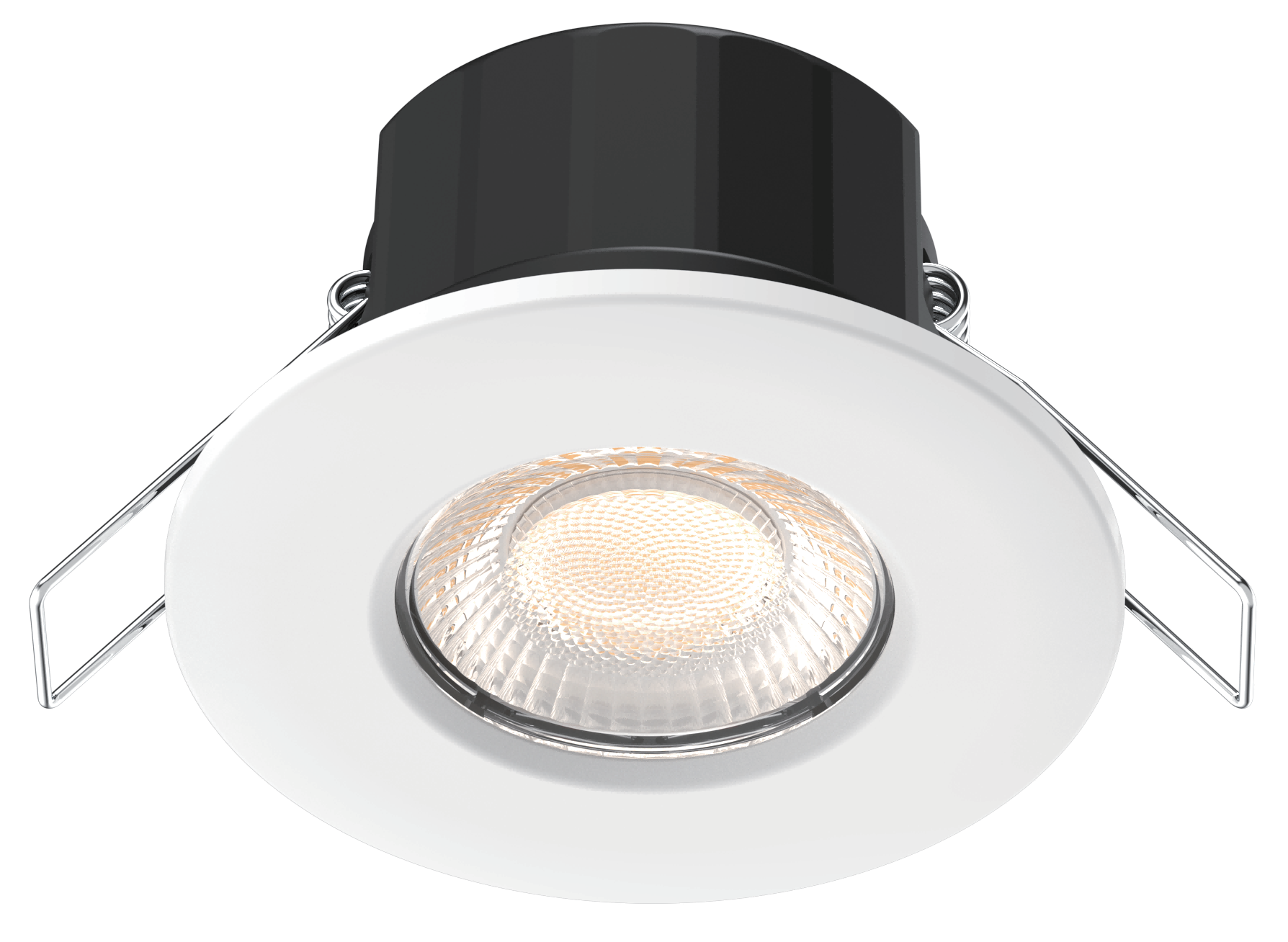
Why Seven Colors Lighting is Your Strategic Partner for Scalable, Cost-Effective Lighting Solutions
In today’s competitive lighting market, procurement challenges are more complex than ever. Project timelines shrink, budgets tighten, and supply chain disruptions can derail even the most meticulously planned installations. As a Senior Lighting Engineer at Seven Colors Lighting, I’ve seen firsthand how these pressures impact businesses—from contractors managing large-scale commercial projects to distributors serving retail clients. The solution isn’t just about finding a supplier; it’s about partnering with a team that transforms these challenges into opportunities. That’s where Seven Colors Lighting stands apart.
Our foundation is built on a network of over 1,000 coordinating factories across China and Southeast Asia. This scale isn’t just about volume—it’s about agility and resilience. When a client needs custom fixtures for a high-rise hotel in Singapore or energy-efficient LED panels for a warehouse in Germany, our integrated factory system ensures seamless coordination. Each facility specializes in specific processes, from precision die-casting to advanced LED driver assembly, all operating under unified quality control protocols. This means no single point of failure; if one plant faces a temporary bottleneck, we instantly reroute production to another without compromising deadlines or specifications. For your business, this translates to consistent product quality, the ability to scale orders up or down rapidly, and the confidence to take on projects of any size without supply chain anxiety.
Equally critical is our factory-direct pricing model. Unlike traditional distributors who add multiple layers of markups, we eliminate intermediaries entirely. Every product is sourced, manufactured, and shipped directly from our partner factories to your doorstep. This isn’t just a cost-saving measure—it’s a strategic advantage. For example, a commercial project requiring 5,000 LED troffers might see a 25–30% reduction in unit costs compared to market averages. These savings aren’t achieved by cutting corners; they come from optimized production workflows, bulk raw material procurement, and streamlined logistics. When you work with us, you’re not buying from a middleman—you’re accessing the same pricing structure as large-scale manufacturers, but with the flexibility to order in quantities that suit your project needs.
Speed is another pillar of our partnership. We understand that in construction or retail rollouts, delays cost money. Our integrated logistics network includes regional warehouses in key global hubs, real-time inventory tracking, and partnerships with top-tier freight carriers. For standard products, we routinely deliver within 10–15 business days globally. For urgent orders, our expedited production lanes and air freight options ensure critical shipments arrive in as little as 7 days. This isn’t just about fast shipping—it’s about predictable, reliable timelines that keep your projects on schedule and your clients satisfied.
At Seven Colors Lighting, we don’t just sell lighting products; we provide a scalable, transparent, and efficient supply chain designed for your success. Whether you’re managing a multi-site renovation or launching a new product line, our 1,000+ factory network, factory-direct pricing, and fast delivery infrastructure work together to remove friction from your procurement process. Let us handle the complexities of sourcing and logistics so you can focus on what matters most: delivering exceptional results for your business.
Ready to experience the difference? Contact our team today to discuss how we can tailor our solutions to your specific project requirements.
Contact Us
Ready to start your project? Contact Seven Colors Lighting (Maxtop Tech) today.
- Email: info@maxtoptek.com
- Tel/Fax: +86-0760-85320448
- Address: 5th Floor, NO.6 Fourth Street, Dongpai Xi Road, Xiaolan Town, Zhongshan City, China
💡 LED Power Calculator
Estimate the power supply needed for your project.
